
Drapetini
Genus Guides
6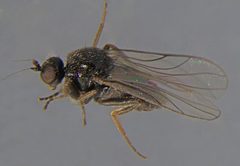
Pronunciation
How to pronounce Drapetini: //dræpˈtiːni//
These audio files are automatically generated. While they are not always 100% accurate, they are a good starting point.
Identification
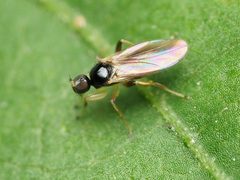
Drapetini can be distinguished from related tribes in Tachydromiinae by combinations of wing venation characters, including reduced or modified anal lobe and specific patterns of termination. The tribe is characterized by small body size (typically 2–5 mm), slender build, and often reduced wing pigmentation. Definitive identification to tribe requires examination of genitalic structures and wing microtrichia patterns.
Images
Habitat
Terrestrial including forest floors, leaf litter, soil surfaces, and low vegetation in both temperate and tropical regions. Many are associated with moist microhabitats near streams or in shaded woodland environments.
Distribution
Worldwide distribution with representation in all major biogeographic regions. Individual show varying patterns: some are (Drapetis, Crossopalpus), while others are restricted to specific regions such as New Zealand (Ngaheremyia), Australia (Austrodrapetis), or the Neotropics (Atodrapetis).
Diet
Predatory on small arthropods including mites, springtails, and other minute soil-dwelling . Prey capture involves rapid pursuit and grasping with forelegs.
Behavior
Active, that run rapidly over substrates rather than flying extensively. are often observed darting among leaf litter or on bare soil surfaces. Many exhibit characteristic stop-start movement patterns while foraging.
Ecological Role
in soil and litter , contributing to regulation of microarthropod . May serve as prey for larger arthropods and small vertebrates.
Similar Taxa
- TachydromiiniBoth tribes occur in Tachydromiinae and share small size and predatory habits; Tachydromiini typically have more complete wing venation with distinct anal lobe and different male genitalic structures.
- HybotiniSister tribe within Hybotidae; Hybotini generally have more robust body form, different wing venation with characteristic bend in R4+5, and occupy more aerial foraging .