
Hilara
Meigen, 1822
Balloon Flies, Dance Flies
Species Guides
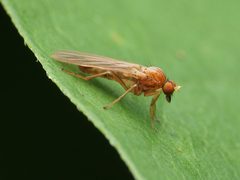
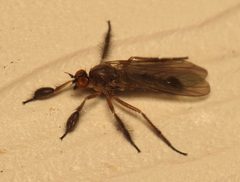
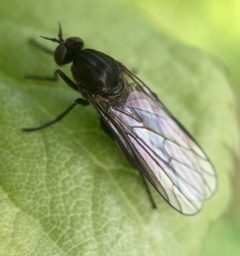
3Hilara is a of dance flies (Empididae) established by Meigen in 1822. in this genus are commonly known as balloon flies due to their distinctive mating where males present silk balloons to females. The genus is taxonomically complex, with species groups such as the Hilara maura-group recognized as monophyletic based on apomorphous characters. Recent research has documented previously unknown morphological variation, including the first report of leg in the genus.
Pronunciation
How to pronounce Hilara: /hɪˈlɑrə/
These audio files are automatically generated. While they are not always 100% accurate, they are a good starting point.
Identification
Identification relies heavily on male genitalia structure and leg characters. in the maura-group share apomorphous characters including distinctive male terminalia. Front tibia and basitarsus shape and are diagnostically important characters, though H. polymorpha has demonstrated that these can vary intraspecifically. (COI) can confirm conspecificity when morphological variation is present.
Images
Habitat
Forest including conifer plantations and coastal . In Italy, collected from forest, Pinus groves (xerophilous pine forest of anthropogenic origin), dunes, and mesophilous forests using .
Distribution
Europe: documented from Belgium, Denmark, Norway, Sweden, and Italy (Tuscany). North America: Vermont, USA. The Hilara maura-group occurs across temperate Central and Western Europe, with some extending to the Caucasus.
Behavior
Males produce silk balloons which are presented to females during courtship, giving the 'balloon flies'. First documented case of leg in the involves variation in front tibia and basitarsus shape and among males of H. polymorpha.
Similar Taxa
- TropicohilaraNew from Brazil distinguished from Hilara by elongate postpedicel, unmodified male first fore tarsomere, hind tibia slightly shorter than hind , wing R2+3 with setae on surface, and distinctive male terminalia structure allowing flexion forward. Hilara lacks these character combinations.
Sources and further reading
- BugGuide
- Wikipedia
- GBIF taxonomy match
- iNaturalist taxon
- NCBI Taxonomy
- Catalogue of Life
- A taxonomic revision of the Hilara maura‐group (Diptera: Empididae) in Europe
- New Species of Empidinae (Diptera) from San Rossore National Park, Italy, with the First Report on Leg Polymorphism in the Genus Hilara Meigen and Their DNA Barcoding Evidence.
- Tropicohilara, a New Genus of Hilarini (Diptera: Empididae: Empidinae) from Brazil, with Descriptions of Six New Species.