
Empis geneatis
(Melander, 1902)
dance fly
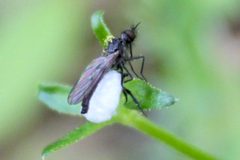
Empis geneatis is a of dance fly in the Empididae, first described by Melander in 1902. It belongs to the subgenus Enolempis within the Empis. Males of this species exhibit distinctive leg modifications: an opposing pair of large teeth on each side of the "knee" joint on the hind leg, a character absent in females. The species is part of a diverse group of predatory flies known for their elaborate courtship .
Pronunciation
How to pronounce Empis geneatis: /ˈɛm.pɪs d͡ʒəˈniː.ə.tɪs/
These audio files are automatically generated. While they are not always 100% accurate, they are a good starting point.
Identification
Males can be recognized by the prominent opposing pair of large teeth on each side of the hind leg "knee" joint (femoro-tibial joint), a feature not present in females. This character is conspicuous enough to be visible without magnification. Females lack these leg modifications. Identification to level within the subgenus Enolempis requires specialized keys and examination of additional morphological characters.
Images
Distribution
Documented from Colorado, USA based on specimen records. Additional distribution data is sparse.
Similar Taxa
- Other Empis speciesLack of male hind leg teeth distinguishes E. geneatis from many ; however, other Enolempis share this trait, requiring finer characters for separation.
- Other Empididae generaThe distinctive male hind leg teeth help separate Empis from other empidid that lack such modifications.
More Details
Taxonomic placement
Placed in subgenus Enolempis, which contains over fifty . The subgenus is characterized in part by male leg modifications, though the specific tooth arrangement in E. geneatis appears distinctive.
Identification challenges
The author of the specimen identification account noted that this conspicuous character was not included in the dichotomous key used, highlighting potential gaps in existing identification resources for this group.