
Systenus albimanus
Wirth, 1952
Systenus albimanus is a of long-legged fly in the Dolichopodidae, described by Wirth in 1952. It belongs to the Medeterinae, a group of small to medium-sized predatory flies commonly found in moist . The species is characterized by its distinctive white fore , referenced in its specific epithet 'albimanus' (white hand). Like other dolichopodids, it is presumed to be predatory as both and larval stages, though specific ecological studies on this species are limited.
Pronunciation
How to pronounce Systenus albimanus: /ˈsɪstɛnəs ˌælbɪˈmeɪnəs/
These audio files are automatically generated. While they are not always 100% accurate, they are a good starting point.
Identification
Distinguished from congeneric primarily by the white fore referenced in its name. Medeterinae can be separated from other Dolichopodidae by wing venation characters, including the position of crossveins and the shape of the . Within Systenus, examination of male genitalia and leg coloration patterns is typically required for species-level identification. The combination of white fore tarsi with otherwise typical dolichopodid should separate this species from most .
Images
Appearance
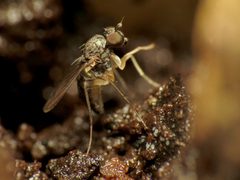
Small to medium-sized long-legged fly with the characteristic slender body and elongated legs typical of Dolichopodidae. The specific epithet 'albimanus' refers to the white fore , a distinctive diagnostic feature. Body likely metallic green, blue, or -colored as is common in the . Wings clear with typical venation for Medeterinae. short with . in size and spacing probable, with males having larger eyes that may meet dorsally.
Habitat
preferences are not specifically documented for this . Members of Medeterinae are generally associated with moist environments including stream banks, marsh edges, wet meadows, and riparian vegetation. Larval stages likely develop in moist soil, decaying vegetation, or mud at water margins.
Distribution
Distribution data are sparse. The is represented in the UCR Entomology Research Museum collection, suggesting occurrence in California or the western United States. Seven observations are recorded in iNaturalist, though specific localities are not detailed in available sources.
Similar Taxa
- Other Systenus species share general body plan and metallic coloration; require examination of leg coloration patterns and male genitalia for separation
- Other Medeterinae genera (e.g., Medetera)Similar preferences and general ; differ in wing venation details and leg proportions
More Details
Taxonomic Note
The Systenus is placed in Medeterinae, which has undergone significant taxonomic revision. concepts in this group rely heavily on male genitalic characters and subtle differences in leg coloration.
Collection History
Specimens of this are present in the University of California, Riverside Entomology Research Museum collection, indicating it has been collected in the course of regional faunistic surveys.