
Brachystoma
Meigen, 1822
Species Guides
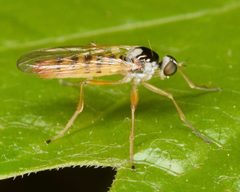
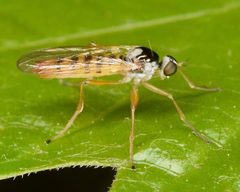
2Brachystoma is a of small predatory flies established by Meigen in 1822. The genus comprises approximately 30 described distributed across Europe and parts of Asia. Brachystoma was historically placed in Empididae but is now recognized as the type genus of the Brachystomatidae. European species have been subject to recent taxonomic revision.
Pronunciation
How to pronounce Brachystoma: /ˌbrækɪˈstoʊmə/
These audio files are automatically generated. While they are not always 100% accurate, they are a good starting point.
Identification
Members of Brachystoma can be distinguished from Empididae sensu stricto by wing venation and genitalic characters. The is characterized by reduced wing venation with a simple anal and distinctive male terminalia. -level identification requires examination of male genitalia and chaetotaxy; several species exhibit distinctive abdominal patterning including maculation and coloration of the scutellum and .
Images
Habitat
occur in diverse terrestrial including grasslands, forest edges, and riparian zones. Specific microhabitat associations vary by species.
Distribution
Europe (Austria, Croatia, France, Germany, Italy, North Macedonia, Poland, Romania, Slovakia, Switzerland) with extension into parts of Asia. The shows a predominantly Palaearctic distribution.
Seasonality
activity period varies by and latitude; most European species are active during spring and summer months.
Life Cycle
Development is holometabolous with , larval, pupal, and stages. Larval is poorly documented but larvae are presumed to be predatory or scavenging in soil or decaying organic matter.
Behavior
are predatory, capturing small prey. A 2025 review discusses possible oviposition , though specific details require examination of the full primary source.
Ecological Role
function as of small arthropods in terrestrial . Larval remains insufficiently documented to assess contribution to soil .
Human Relevance
No documented economic or medical importance. The is of interest to dipterists and systematists due to its taxonomic history and recent -level reclassification.
Similar Taxa
- Empididae (sensu stricto)Historically confused with Brachystoma; distinguished by wing venation (complete anal in Empididae) and genitalic structure
- TachydromiinaeSimilar small predatory flies; Brachystoma distinguished by body proportions and wing venation
More Details
Taxonomic History
Brachystoma was long treated as a within Empididae but is now placed in the separate Brachystomatidae ( Brachystomatinae, tribe Brachystomatini) based on phylogenetic and morphological evidence.
Species Diversity
The contains approximately 30 described , with European fauna revised in 2025. Several species were described by Smith in 1969, indicating a mid-20th century period of taxonomic activity.
Sources and further reading
- BugGuide
- Wikipedia
- iNaturalist taxon
- NCBI Taxonomy
- Catalogue of Life
- OBSERVATIONS ON THE TOXOGLOSSAN GASTROPOD MANGELIA BRACHYSTOMA (PHILIPPI)
- Rediscovery of Primula brachystoma (Primulaceae), a rare species endemic to Gaoligong Mountain of Chinese-Burma frontier
- A review of the genus Brachystoma Meigen, 1822 in Europe (Diptera, Brachystomatidae) with a discussion of possible oviposition behaviour
- Population genetic structure of the endangered Butler’s Gartersnake (Thamnophis butleri): does the Short-headed Gartersnake (Thamnophis brachystoma) exist in Canada?