
Uranotaenia lowii
Theobald, 1901
Pale-footed Uranotaenia
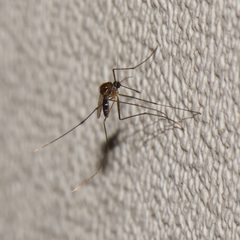
Uranotaenia lowii is a frog-biting mosquito distributed across the Americas. The exhibits a unique phonotactic : females are attracted to the acoustic calls of male frogs, specifically the barking tree frog (Hyla gratiosa). This represents the first documented case of a female mosquito being attracted to sound rather than visual or chemical cues. The species inhabits lowland environments and has been documented using 450 Hz frequency detection via to locate hosts.
Pronunciation
How to pronounce Uranotaenia lowii: /ˌʊ.rə.noʊˈtiː.ni.ə ˈloʊ.i.aɪ/
These audio files are automatically generated. While they are not always 100% accurate, they are a good starting point.
Images
Habitat
Lowland localities. Specific microhabitat details beyond elevation zone are not documented.
Distribution
North America, Central America, and South America. Documented in Rica (seven lowland localities), Brazil (Pará and Rondônia states), and Villavicencio, Colombia. Caribbean region: present.
Host Associations
- Hyla gratiosa - confirmed acoustic attraction to male callsbarking tree frog; 450 Hz fundamental frequency, 0.15 s duration, repeated once per second
- frogs - recognized group is established as frog-biting mosquito
Behavior
Females exhibit phonotaxis toward male frog calls. Acoustic sensitivity to approximately 450 Hz frequency detected via . This is the first documented observation of female mosquito attraction to sound.
Similar Taxa
- Corethrella spp.frog-biting midges that also use acoustic attraction to frog calls; collected during same survey efforts in Rica
- Other Uranotaenia speciescongeneric mosquitoes sharing -level traits, though specific frog-biting and acoustic attraction may not be shared