
Orthopodomyia
Theobald, 1904
tree hole mosquito, ornate mosquito
Species Guides
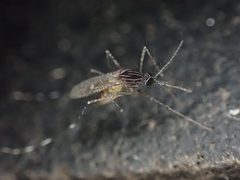
1- Orthopodomyia signifera(Ornate Treehole Mosquito)
A of wild mosquitoes comprising 36 distributed primarily in tropical and temperate regions. are predominantly and essentially wild in habit. Most species are not recognized as epidemiologically important due to limited bionomic knowledge. The genus is phylogenetically close to tribe Mansoniini based on molecular evidence.
Pronunciation
How to pronounce Orthopodomyia: /ˌɔːrθoʊˌpɒdoʊˈmaɪə/
These audio files are automatically generated. While they are not always 100% accurate, they are a good starting point.
Images
Habitat
stages develop in phytotelmata including tree holes, bamboo stumps and internodes, bromeliad axils, and Heliconia flower spathes. Occasional use of artificial containers has been observed.
Distribution
Largely restricted to tropical and temperate areas. are organized into eight groups, each largely or entirely restricted to a single zoogeographic region. Documented in North America (Florida, Connecticut, New Jersey, Michigan, Illinois, Great Lakes region), Neotropics (Brazilian Amazon), and Southeast Asia.
Diet
Larval stages feed by filtering microorganisms and small particles from water.
Host Associations
- birds - blood meal sourcefemales exhibit ornithophilic
- humans - blood meal sourceonly Orthopodomyia albipes and Orthopodomyia andamanensis known to feed on humans
Life Cycle
Pupal stage duration is five to eight days before . Adults exhibit predominantly activity. Seasonal development varies with weather conditions.
Behavior
are essentially wild with predominantly activity. Females exhibit ornithophilic . Unusual larval survival in presence of predatory mosquito Toxorhynchites rutilus septentrionalis has been observed in some .
Ecological Role
Assumed role in transmission cycles of avian due to ornithophilic feeding . Orthopodomyia signifera has been reported as a competent for virus and Western Equine virus. Generally not recognized as vectors of medical-epidemiological importance.
Human Relevance
Minimal direct medical importance. Two (O. albipes and O. andamanensis) are known to bite humans. O. signifera implicated as competent for equine viruses.