
Psectrotanypus
Kieffer, 1909
non-biting midge
Species Guides
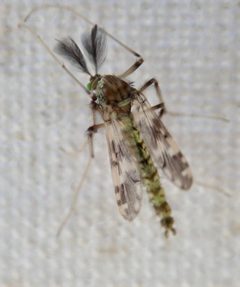
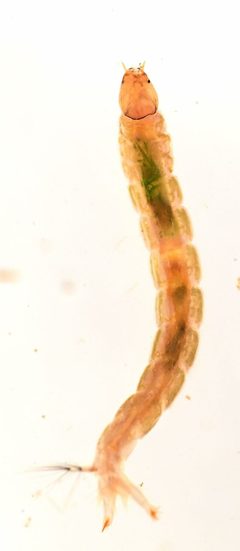
1Psectrotanypus is a of non-biting midges in the Chironomidae, Tanypodinae. The genus contains at least 15 described . One species, Psectrotanypus varius, has been documented occurring in heavily polluted waters with limited accompanying species. Like other chironomids, larvae are aquatic and do not bite.
Pronunciation
How to pronounce Psectrotanypus: //ˈsɛk.troʊ.təˌnaɪ.pəs//
These audio files are automatically generated. While they are not always 100% accurate, they are a good starting point.
Identification
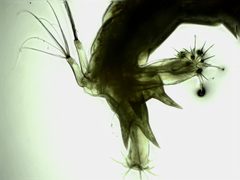
Members of Psectrotanypus can be distinguished from other by features associated with the tribe Macropelopini. is present, with males and females showing differences in and other structures. Identification to level requires examination of male genitalia and other microscopic features.
Images
Habitat
Aquatic or semi-aquatic environments. Larvae develop in water. Psectrotanypus varius has been observed in heavily polluted waters.
Distribution
Records exist from Denmark (DK), Norway (NO), and Sweden (SE). The likely has a broader distribution in the Holarctic region given its presence in North America (documented in Kansas, USA) and Europe.
Seasonality
have been observed in early spring (March) in temperate regions, suggesting following winter or early season larval development.
Life Cycle
Complete with , larval, pupal, and stages. Larvae are aquatic. The larval stage is the longest, with adults being short-lived and non-feeding or feeding minimally. Psectrotanypus varius overwinters in the pupal stage.
Behavior
are attracted to artificial light sources at night. They are frequently mistaken for mosquitoes due to similar size and general appearance, but do not bite.
Ecological Role
Larvae contribute to aquatic as prey for fish and other aquatic organisms. The presence of Psectrotanypus varius in polluted waters indicates to degraded conditions, potentially serving as an for eutrophic or polluted aquatic systems.
Human Relevance
Non-biting; does not transmit . may be nuisance pests when abundant near artificial lights. The has been used in studies of water quality and pollution .
Similar Taxa
- ChironomusBoth are with aquatic larvae, but Chironomus belongs to Chironominae rather than Tanypodinae, and larvae often have different preferences.
- MacropelopiaSame tribe (Macropelopini) and similar larval ; distinguished by genitalia and other subtle morphological features.
- mosquitoes (Culicidae)Frequently mistaken for Psectrotanypus due to similar size and swarming , but mosquitoes have scaled wings and piercing mouthparts for blood-feeding in females.
Misconceptions
are commonly mistaken for biting mosquitoes due to their small size and swarming near water, but they lack piercing mouthparts and do not bite humans.
More Details
Pollution Tolerance
Psectrotanypus varius is documented as occurring in very polluted waters with few other accompanying , suggesting this species may be particularly tolerant of degraded aquatic conditions.
Taxonomic History
established by Kieffer in 1909. Contains approximately 15 described according to available catalogues.