
Macropelopiini
Genus Guides
4- Alotanypus
- Apsectrotanypus
- Psectrotanypus(non-biting midge)
- Radotanypus
Macropelopiini is a tribe of non-biting midges within the Tanypodinae of Chironomidae. Members are characterized by distinctive morphological features that distinguish them from related tribes, including specific arrangements of tergal setation in and thoracic horn aeropyles in pupae. The tribe includes such as Macropelopia, Apsectrotanypus, Psectrotanypus, and the more recently described Bilyjomyia and Chaudhuriomyia. Macropelopiini have been documented across multiple continents including North America, Europe, Asia, and Africa.
Pronunciation
How to pronounce Macropelopiini: /ˌmakroʊpɛˈloʊpi.aɪnaɪ/
These audio files are automatically generated. While they are not always 100% accurate, they are a good starting point.
Identification
Macropelopiini can be distinguished from tribe Chironomini and other Tanypodinae by the reduced and posteriorly restricted setation of T.IX in males. Within Tanypodinae, separation from Pentaneurini relies on specific tergal setation patterns and thoracic horn structure in pupae. The blunt fore leg claw and smooth tibial spur in adult males separate Chaudhuriomyia and related from Macropelopia. Larval identification requires examination of the labral and cephalic setae arrangement.
Images
Appearance
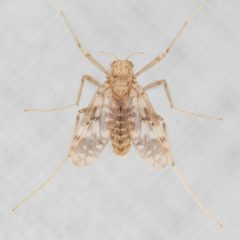
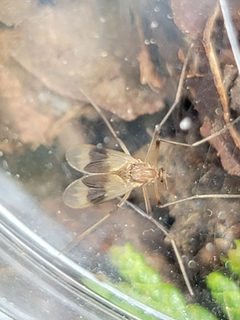
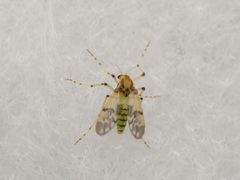
males of Macropelopiini exhibit reduced setation on tergite IX (T.IX), with setae restricted to the tergal edge. The fore leg of adult males possesses a blunt claw and the tibial spur has a smooth surface. Adult females have seminal capsules lacking a proper neck. Pupal stage features include round anal lobes and thoracic horns with distinct aeropyles. Larvae are characterized by a labral and specific positioning and form of cephalic setae; the inner tooth of the ligula is slightly inwardly bent.
Habitat
Larvae develop in aquatic , primarily lotic environments including streams. Specimens of Chaudhuriomyia were collected from a stream in the Eastern Himalaya. are attracted to lights and can be found near aquatic breeding sites.
Distribution
Holarctic distribution documented, with records from western North America, Japan, Europe, and the Indo-Bhutan border area of the Eastern Himalaya. The tribe is also present in Africa south of the Sahara. Distribution patterns in some suggest historical across the Bering Land Bridge.
Seasonality
have been observed in early spring (March-April) in temperate North America. Non-biting midges in Chironomidae are present nearly year-round in many regions.
Life Cycle
Complete with four life stages: , larva, pupa, and . All life stages have been described for multiple including Bilyjomyia and Chaudhuriomyia. Larvae are aquatic; occurs in water. Adults are terrestrial and short-lived.
Behavior
are and attracted to artificial light sources. Larvae are aquatic and typically benthic.
Ecological Role
Larvae function as scavengers in aquatic . Position in and specific ecosystem functions beyond scavenging have not been documented in available sources.
Human Relevance
are frequently mistaken for mosquitoes due to morphological resemblance but are harmless and do not bite. Adults attracted to lights may accumulate near human habitations.
Similar Taxa
- ChironominiAlso non-biting midges in Chironomidae; distinguished by different tergal setation patterns and pupal thoracic horn structure
- PentaneuriniRelated tribe in Tanypodinae; separated by tergal setation patterns and other morphological features detailed in taxonomic keys
Misconceptions
are commonly mistaken for mosquitoes by the public due to similar appearance, but unlike mosquitoes, Macropelopiini do not bite and pose no medical threat.
More Details
Taxonomic History
The tribe was classified according to the scheme proposed by E. J. Fittkau. Recent revisions have erected new including Bilyjomyia (2024) and Chaudhuriomyia (2015) based on distinct morphological characters.
Research Methods
Taxonomic studies rely heavily on examination of collections and detailed morphological analysis of all life stages, with keys developed for identification of tribe members.
Sources and further reading
- BugGuide
- Wikipedia
- iNaturalist taxon
- NCBI Taxonomy
- Bug Eric: First Night of Blacklighting
- Bug Eric: April 2024
- Bilyjomyia, a new genus of the tribe Macropelopiini from the Holarctic (Diptera: Chironomidae)
- Chaudhuriomyia, a new tanypod genus of Macropelopiini (Diptera: Chironomidae: Tanypodinae) from the Eastern Himalaya
- A CONSPECTUS OF THE MACROPELOPIINI AND PENTANEURINI (TANYPODINAE: CHIRONOMIDAE) OF AFRICA SOUTH OF THE SAHARA