
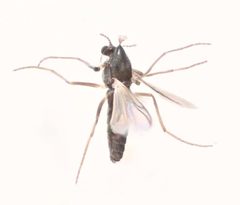
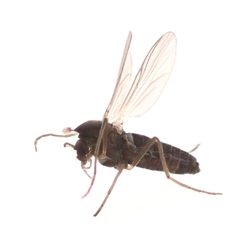
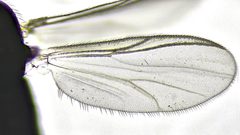
Limnophyes viribus
Eiseman, Namayandeh, van der Linden & Palmer, 2023
A recently described non-biting midge (Diptera: Chironomidae) known for its distinctive . Larvae inhabit vacated leaf mines created by Metriocnemus erythranthei rather than excavating their own tunnels. Described in 2023 from collections in Iowa and Oregon, USA.
Pronunciation
How to pronounce Limnophyes viribus: /lɪmˈnɒf.jɛs ˈvɪr.ɪ.bʊs/
These audio files are automatically generated. While they are not always 100% accurate, they are a good starting point.
Identification
Distinguished from by larval : occupies abandoned serpentine mines rather than creating fresh mines. likely separable from other Limnophyes by genitalic characters, though specific diagnostic features for this recently described require reference to the original description.
Images
Habitat
Herbaceous wetland plants; specifically associated with leaf mines in wetland vegetation.
Distribution
Known from Iowa and Oregon, USA.
Host Associations
- Metriocnemus erythranthei - (occupies vacated larval mines)Larval ; not a food source in the traditional sense
Life Cycle
Larval stage develops within vacated mines of Metriocnemus erythranthei; and presumably occur in proximity to plant .
Behavior
Exhibits : larvae colonize abandoned leaf mines rather than mining fresh leaf tissue. This represents a derived strategy that avoids the energetic cost of excavating mines.
Ecological Role
Secondary occupant of leaf mine microhabitats; may compete with other potential colonizers of vacated mines.
Similar Taxa
- Metriocnemus erythrantheiCreates the leaf mines that L. viribus inhabits; distinguished by active mining and fresh mine excavation
- Metriocnemus eurynotusAlso associated with leaf mines on similar plants; distinguished by broader host range including Impatiens and by feeding both as leafminer and externally
Sources and further reading
- BugGuide
- GBIF taxonomy match
- iNaturalist taxon
- Catalogue of Life
- Metriocnemus erythranthei sp. nov. and Limnophyes viribus sp. nov. (Diptera: Chironomidae: Orthocladiinae): leafminers of monkeyflowers, speedwells, and other herbaceous plants, with new observations on the ecology and habitats of other leaf-mining Chironomidae