
Stictochironomus
Kieffer, 1919
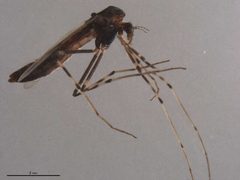
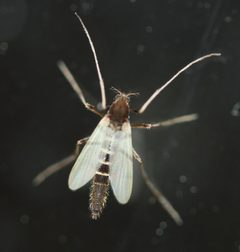
Stictochironomus is a of non-biting midges (Chironomidae) with nearly worldwide distribution across all biogeographical regions except Antarctica. The genus contains more than 30 , characterized by distinctive color patterns on wings and legs that serve as important diagnostic features for species identification. Larvae inhabit sand and sediments in freshwater at densities of several hundred per square meter. studies support the use of color-pattern-based species delimitation, with a genetic divergence threshold of 4.5–7.7% appropriate for distinguishing species.
Pronunciation
How to pronounce Stictochironomus: //ˌstɪktoʊkɪˈrɒnəməs//
These audio files are automatically generated. While they are not always 100% accurate, they are a good starting point.
Identification
distinguished by strongly marked wings and legs with -specific color patterns; wing patterns include dark spots near cross r-m and variable maculation. Larvae have distinct dark patterns on the side of the capsule. Male adults possess characteristic hypopygium with superior volsella bearing multiple basal setae. Females identified by antennal ratio, seminal capsule shape (ovoid, transparent), and morphology. Species-level identification traditionally relies on color patterns, though some morphologically similar species show low interspecific genetic divergence.
Images
Habitat
Larvae live in sand and other sediments of freshwater including profundal soft sediments and of oligotrophic lakes, streams, and slowly flowing rivers. S. maculipennis larvae have been observed living up to 6 cm deep in sediment. collected using light traps or sweep nets near water bodies.
Distribution
Almost worldwide, occurring in all biogeographical regions except Antarctica. Documented from China, Europe (Denmark, Norway, Sweden), and North America. Type localities include Longtan Village, Henan Province, China for S. longtanensis.
Life Cycle
Complete with , larval, pupal, and stages. Larvae are aquatic and benthic, inhabiting sediment substrates. S. maculipennis larvae migrate between deeper sediment layers and the sediment surface, possibly for respiration. Adult timing varies by ; S. longtanensis adults collected in April.
Behavior
Larvae of S. maculipennis live relatively deep in sediment (up to 6 cm) and have been suggested to migrate vertically within sediments, potentially to avoid and access surface layers for respiration. are attracted to light traps.
Ecological Role
Member of Chironomidae, the most widely dispersed and often most abundant insect group in freshwater . Larvae contribute to benthic structure in densities of several hundred per square meter.
Similar Taxa
- ChironomusBoth are with aquatic larvae, but Stictochironomus is distinguished by strongly marked wing and leg color patterns and distinct larval capsule patterning; Chironomus larvae typically lack such pronounced head markings and generally show less distinct wing patterning.
- PolypedilumAnother chironomine with patterned wings, but Stictochironomus exhibits more strongly marked legs and specific larval capsule dark patterns not characteristic of Polypedilum.
Sources and further reading
- BugGuide
- Wikipedia
- GBIF taxonomy match
- iNaturalist taxon
- NCBI Taxonomy
- Catalogue of Life
- Description of Stictochironomus affinis (Johannsen) (Diptera: Chironomidae), with Notes on Its Behavior
- DNA Barcoding Supports “Color-Pattern’’-Based Species of Stictochironomus from China (Diptera: Chironomidae)
- Description of a new species of Stictochironomus Kieffer, 1919 (Diptera, Chironomidae) from China based on DNA barcoding and adult morphology.