Glyptotendipes paripes
(Edwards, 1929)
Glyptotendipes paripes is a non-biting midge (Chironomidae) with a in temperate regions. Larvae are filter-feeders that inhabit lake and pond sediments, consuming planktonic diatoms and sestonic particles. The is known from both European and North American , with well-studied populations in central Florida lakes and prairie ponds. Larval distribution is strongly influenced by sediment organic content and particle size, with highest densities in fine, organic-rich sediments.
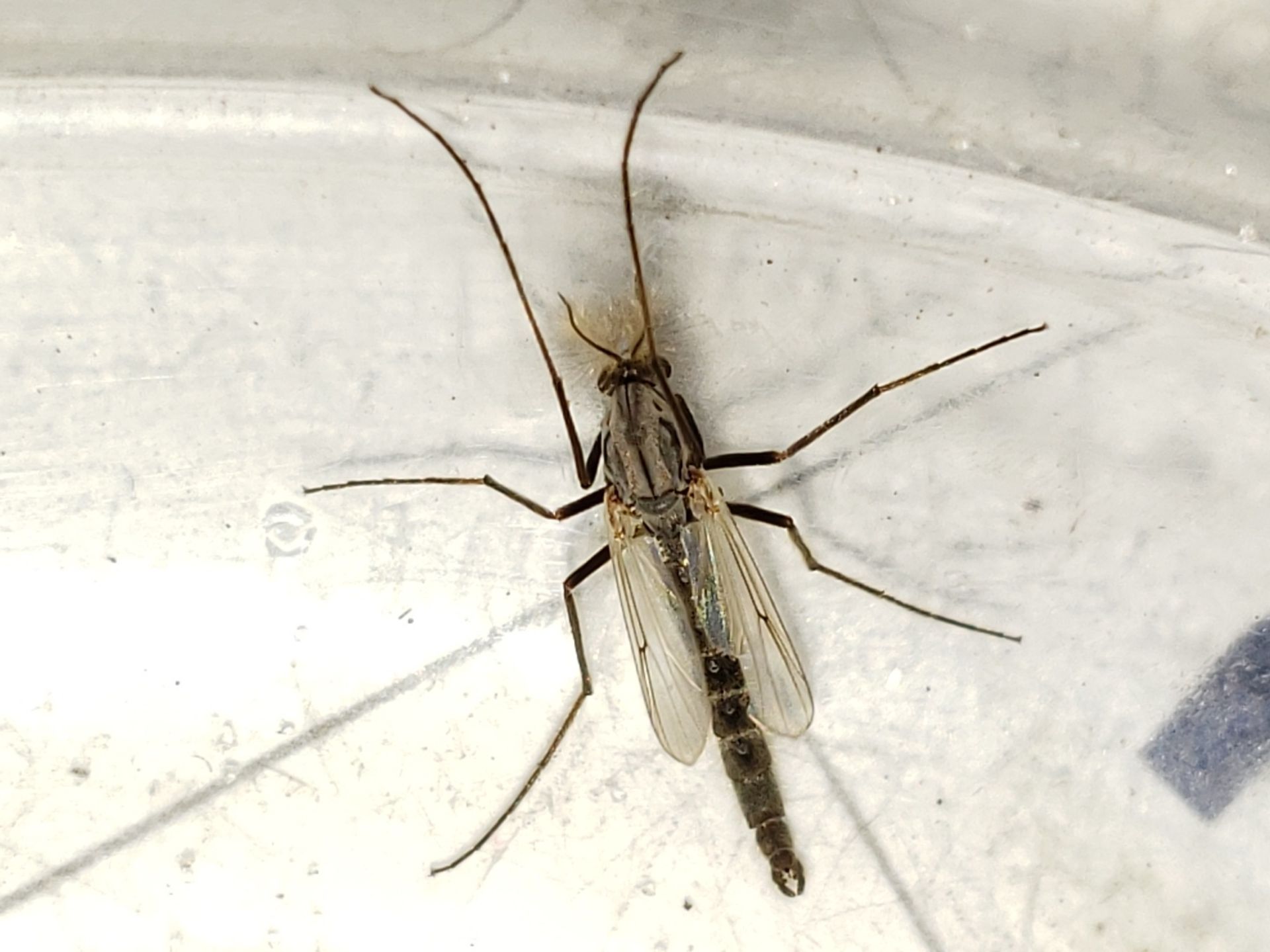
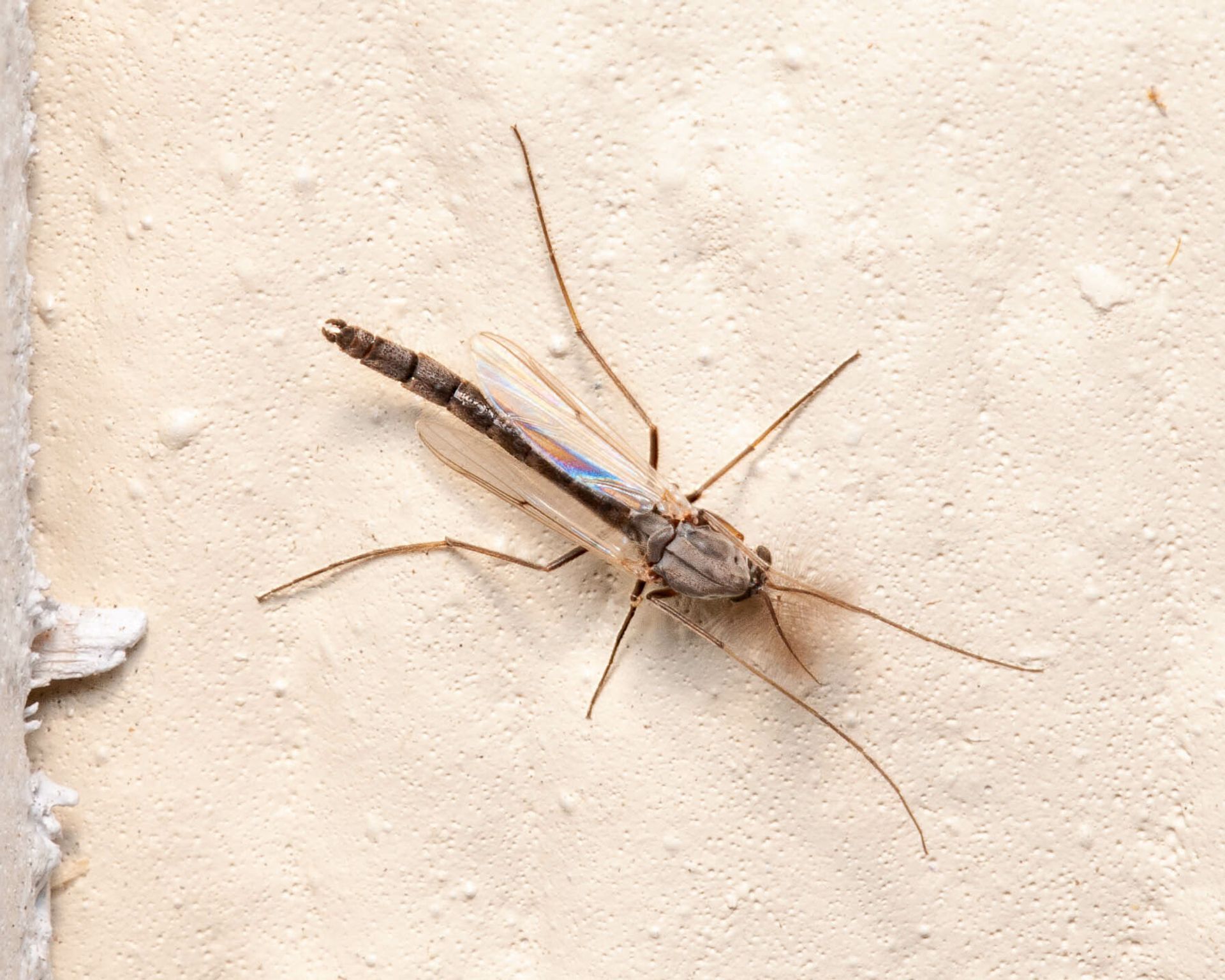
Pronunciation
How to pronounce Glyptotendipes paripes: /ˌɡlɪptoʊˈtɛndɪˌpiːz ˈpɛərɪˌpiːz/
These audio files are automatically generated. While they are not always 100% accurate, they are a good starting point.
Identification
Larvae can be distinguished from co-occurring chironomids by their filter-feeding and associated tube . Fourth instar larvae contain predominantly planktonic diatoms and microdetritus with very little silt in their guts, in contrast to deposit-feeding like Chironomus riparius which contain mainly silt particles. identification requires examination of genitalia; have been described based on European (G. p. albobulatus, G. p. flavipes, G. p. paripes).
Images
Habitat
Freshwater lakes and ponds, specifically the mud-water interface. Larvae are most abundant in sediments with high organic content and fine particle sizes (silt/clay). Central Florida lake incorporate bathymetry, sediment dry weight, and water level as key variables affecting distribution.
Distribution
Europe (including Denmark, Norway, Sweden); North America (central Florida lakes, prairie ponds near Calgary, Alberta). GBIF records confirm presence in Scandinavia. The has been intensively studied in central Florida lakes and in Stephenson Pond, Alberta.
Seasonality
with , , and oviposition occurring mainly during May. Larvae overwinter as mature fourth instars. Majority of larval growth occurs during fourth instar from August to October in temperate prairie pond environments.
Diet
Filter-feeder consuming planktonic diatoms, sestonic particles, and microdetritus. Gut contents show 37.6% organic content, significantly higher than deposit-feeding chironomids. Feeding is associated with algal blooms including Aphanizomenon and autumn diatom pulses.
Life Cycle
with temperature-dependent development. deposited during May; larvae progress through instars with as mature fourth instars. and in spring. modeled using three-dimensional matrix projections with Lefkovitch matrix for survival and development.
Behavior
Larvae construct tubes and exhibit filter-feeding , drawing water through tubes to capture sestonic particles. disperse over for oviposition. -dependent has been observed. Spatial distribution within lakes is strongly structured by sediment characteristics rather than random.
Ecological Role
Primary consumer linking algal production to higher . Contributes to benthic production in lakes and ponds. In central Florida, considered pestiferous requiring management. Coexists with deposit-feeding chironomids through differential feeding mechanisms, reducing .
Human Relevance
Considered a pest in central Florida lakes requiring management intervention. Subject of ecological modeling studies for predicting distributions to inform management strategies. Used in comparative studies of feeding and life-history strategies.
Similar Taxa
- Chironomus ripariusCo-occurs in same but distinguished by deposit-feeding (vs. filter-feeding), silt-dominated gut contents (vs. planktonic diatoms), and lower assimilation (5.9% vs. 11.9%)
More Details
Subspecies
Three recognized in Europe: Glyptotendipes paripes albobulatus Kruseman, 1933; G. p. flavipes Kruseman, 1933; and G. p. paripes.
Population Modeling
Spatially explicit computer models have been developed incorporating lake bathymetry, sediment characteristics, water level, food availability (as function of Secchi disk transparency), and to predict distributions, achieving 0.64-0.66 for distributions and 0.85-0.88 for sampling stratification matching.
Sources and further reading
- BugGuide
- Wikipedia
- GBIF taxonomy match
- iNaturalist taxon
- NCBI Taxonomy
- Uncategorized | Blog - Part 2
- The life-history, distribution, and production of Chironomus riparius and Glyptotendipes paripes in a prairie pond
- A spatially explicit computer model for immature distributions of Glyptotendipes paripes (Diptera: Chironomidae) in central Florida lakes
- Influence of Selected Sediment Physical Parameters on Spatial Distribution of Larval Glyptotendipes paripes (Diptera: Chironomidae) in Three Central Florida Lakes
- Ecological Studies of Spatial and Temporal Distributions of Larval Chironomidae (Diptera) with Emphasis onGlyptotendipes paripes(Diptera: Chironomidae) in Three Central Florida Lakes
- Comparison of gut contents and assimilation efficiency of fourth instar larvae of two coexisting chironomids, Chironomus riparius Meigen and Glyptotendipes paripes (Edwards)