
Endochironomus nigricans
(Johannsen, 1905)
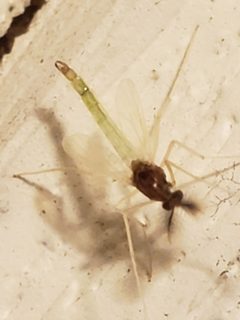
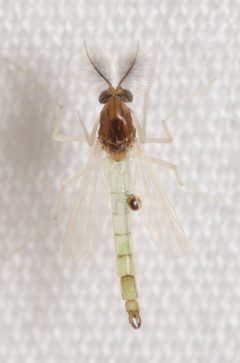
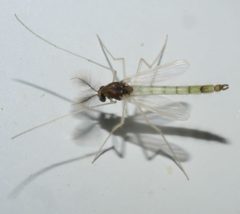
Endochironomus nigricans is a non-biting midge in the Chironomidae, first described by Johannsen in 1905. The species is found primarily in North America. As a member of the Chironomidae, it has an aquatic larval stage and a short-lived stage that does not feed.
Pronunciation
How to pronounce Endochironomus nigricans: //ˌɛndoʊˈkɪrənəməs ˈnɪɡrɪkænz//
These audio files are automatically generated. While they are not always 100% accurate, they are a good starting point.
Identification
Distinguishing Endochironomus nigricans from other requires examination of genitalia structures in males and detailed morphological analysis. The Endochironomus is characterized by specific features of the hypopygium (male genitalia) and larval structure. Species-level identification typically requires slide-mounted specimens and reference to Johannsen's original description and subsequent taxonomic revisions.
Images
Habitat
Aquatic or semi-aquatic environments during larval stage; often found near water bodies. Specific microhabitat preferences for this are not well documented.
Distribution
Primarily North America. GBIF records indicate no distribution data available; iNaturalist records 441 observations suggesting established across the continent.
Life Cycle
Complete with four stages: , larva, pupa, and . Larvae are aquatic, living in freshwater . Adults are short-lived and do not feed, surviving on energy reserves accumulated during the larval stage.
Behavior
are known to form mating swarms, a common in Chironomidae. Males typically swarm at dusk near water bodies to attract females. Adults are attracted to lights.
Ecological Role
Larvae serve as important components of freshwater , processing organic matter and serving as prey for fish and other aquatic . contribute to nutrient transfer between aquatic and terrestrial .
Human Relevance
Non-biting midges are generally harmless to humans, lacking functional mouthparts for biting. They may occasionally be nuisance pests when emerge in large numbers. The has no documented economic or medical importance.
Similar Taxa
- Other Endochironomus species-level characters including male genitalia and larval structure require expert examination for separation
- Other Chironomidae genera-level characters of in males, reduced wing venation, and aquatic larvae distinguish Chironomidae from other Diptera families
More Details
Taxonomic History
First described by Johannsen in 1905, this has remained within the Endochironomus without major taxonomic revision. The genus Endochironomus is part of the Chironominae within Chironomidae.
Research Status
This appears to be understudied, with limited published information on its , , or distribution beyond basic taxonomic records. The 441 iNaturalist observations suggest it is regularly encountered but not well documented in scientific literature.