
Demeijerea
Kruseman, 1933
Species Guides
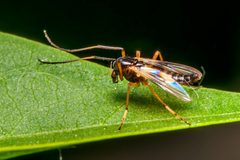
2Demeijerea is a of non-biting midges in the Chironomidae, Chironominae. The genus was established by Kruseman in 1933 and contains four described . Members of this genus are found in Europe, with distribution records from Denmark, Norway, and Sweden. Like other chironomids, the larvae are aquatic and the do not feed.
Pronunciation
How to pronounce Demeijerea: //dəˌmeɪiˈʒɪəriə//
These audio files are automatically generated. While they are not always 100% accurate, they are a good starting point.
Identification
Distinguishing Demeijerea from other Chironominae requires examination of male genitalia and pupal characteristics. Specific diagnostic features are not documented in the provided sources.
Images
Habitat
Aquatic or semi-aquatic environments where larvae develop; specific preferences are not documented in available sources.
Distribution
Europe: confirmed records from Denmark, Norway, and Sweden.
Diet
do not feed. Larval diet is not documented in available sources.
Life Cycle
Complete with , larva, pupa, and stages. Larvae are aquatic. Specific details are not documented in available sources.
Ecological Role
Larvae contribute to aquatic as prey for fish and other . Specific ecological functions are not documented in available sources.
Similar Taxa
- Other Chironominae generaSimilar ; requires genitalia examination for definitive identification.
- Other Chironomidae generaNon-biting midges share general body plan; -level characters separate Demeijerea.
More Details
Species List
Four are recognized: D. abruptus (Townes, 1945), D. brachialis (Coquillett, 1907), D. obreptus (Townes, 1945), and D. rufipes (Linnaeus, 1761). The latter was originally described by Linnaeus in 1761, indicating long recognition of this .
Taxonomic History
The was established by Kruseman in 1933. The iNaturalist summary describes the genus as 'European,' though this may reflect sampling rather than definitive range limits.