
Cryptochironomus
Kieffer, 1918
non-biting midges
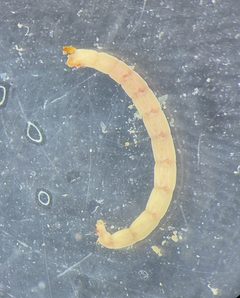
Cryptochironomus is a of non-biting midges ( Chironomidae) with over 80 described distributed worldwide. The genus belongs to the Harnischia generic complex within the Chironominae. Larvae are aquatic and inhabit bottoms of lakes and large rivers, with some species also found in small streams. Species have been documented from North America, Europe, and Asia, including detailed studies from Lake Winnipeg, Michigan, and China.
Pronunciation
How to pronounce Cryptochironomus: /ˌkrɪptoʊkɪˈrɒnəməs/
These audio files are automatically generated. While they are not always 100% accurate, they are a good starting point.
Identification
Cryptochironomus can be distinguished from related in the Harnischia complex by morphological characters of the males, pupae, and larvae. Keys are available for Nearctic males, pupae, and larvae. The genus is sister to Demicryptochironomus based on mitochondrial . Specific diagnostic characters include features of the male genitalia and larval , though detailed morphological descriptions require examination of taxonomic literature.
Images
Habitat
Aquatic freshwater environments. Larvae inhabit bottoms of lakes and large rivers; minority of occur in small streams. Documented from lacustrine environments including Lake Winnipeg and various lakes in Michigan.
Distribution
distribution. Documented from North America (Canada: Manitoba; USA: Michigan), Europe, and Asia (China). GBIF records indicate presence in Colombia (Tolima), Denmark, Norway, and Sweden.
Life Cycle
Holometabolous development with four stages: , larva, pupa, and . Larval instars separate approximately following . All stages and both sexes have been described for some (e.g., C. imitans). Larvae and pupae are aquatic; adults are terrestrial but short-lived.
Ecological Role
Larvae serve as for environmental monitoring within the Harnischia generic complex. Some in this complex are tolerant to organic pollution and indicate eutrophication, though specific indicator status for Cryptochironomus species requires species-level verification.
Human Relevance
Potential use in biomonitoring of freshwater health. No direct economic importance documented. do not bite or feed.
Similar Taxa
- DemicryptochironomusSister to Cryptochironomus based on mitochondrial ; closely related within the Harnischia generic complex
- HarnischiaMember of the same generic complex; historically contentious phylogenetic relationships now resolved with Cryptochironomus and Demicryptochironomus as sister separate from Harnischia
- CladopelmaRelated within Chironominae; included in mitogenome studies of the Harnischia complex for phylogenetic comparison
More Details
Phylogenetic position
Mitochondrial analysis (15,662-17,642 ) confirms Cryptochironomus as sister to Demicryptochironomus with strong support for Harnischia monophyly. All 13 protein-coding genes under purifying selection; ATP8 gene shows fastest evolutionary rate.
Taxonomic history
C. stylifera (Johannsen, 1908) is a senior synonym of C. redekei Kruseman, 1933. New continue to be described, including C. imitans from Lake Winnipeg and C. inflatus from Oriental China.
Sources and further reading
- BugGuide
- Wikipedia
- GBIF taxonomy match
- iNaturalist taxon
- NCBI Taxonomy
- Catalogue of Life
- Cryptochironomus Kieffer from Lake Winnipeg, Canada, with a review of Nearctic species (Diptera: Chironomidae)
- Larvae and Pupae of the Species of Cryptochironomus (Diptera) in Michigan1
- Phylogenetic and Comparative Analysis of Cryptochironomus, Demicryptochironomus and Harnischia Inferred from Mitogenomes (Diptera: Chironomidae)
- DNA barcodes and morphology reveal new species within the Cryptochironomus Kieffer from Oriental China (Diptera: Chironomidae)