
Cladopelma
Kieffer, 1921
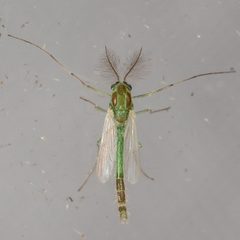
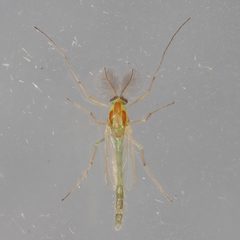
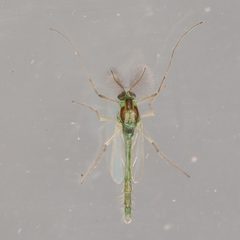
Cladopelma is a of non-biting midges in the Chironomidae, described by Kieffer in 1921. The genus belongs to the Chironominae and tribe Chironomini. It is in distribution, with documented across six major biogeographic regions. The type species is Cladopelma virescens (Meigen, 1818), designated by Harnisch in 1923. The genus currently contains 16 described species.
Pronunciation
How to pronounce Cladopelma: /ˌklædoʊˈpɛlmə/
These audio files are automatically generated. While they are not always 100% accurate, they are a good starting point.
Identification
males of Cladopelma can be distinguished using keys provided in Cranston et al. (1989) for the Holarctic region. Specific diagnostic characters require examination of genitalia and other microscopic features typical of . Identification to level is challenging and generally requires specialized taxonomic expertise.
Images
Distribution
Worldwide distribution including Palaearctic, Nearctic, Neotropical, Afrotropical, Sino-Indian, and Austroasian regions. Distribution records from GBIF include Denmark, Norway, and Sweden.
Life Cycle
As with other Chironomidae, Cladopelma has a complete with , larval, pupal, and stages. Larvae are aquatic and typically inhabit freshwater sediments.
Ecological Role
Larvae function as benthic in freshwater , contributing to nutrient cycling and serving as food for aquatic . do not feed and are not blood-sucking.
Human Relevance
Non-biting midges in this do not bite humans or transmit . They may be encountered in ecological monitoring and biomonitoring studies of freshwater .
Similar Taxa
- Other Chironomini generaCladopelma shares tribe Chironomini with numerous other ; differentiation requires examination of male genitalia and other subtle morphological characters.
More Details
Taxonomic History
The was established by Kieffer in 1921. Harnisch designated Cladopelma virescens as the type in 1923. A major revision of male identification for the Holarctic was published by Cranston et al. (1989), and Yan et al. (2008) treated the Sino-Indian fauna.
Species Diversity
Sixteen are currently recognized, including widespread species such as C. virescens and C. viridulum, as well as more regionally restricted species described from Japan, China, and other areas.