
Homaluroides
Sabrosky, 1980
grass flies
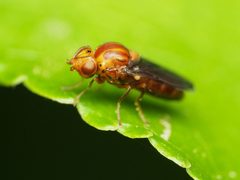
Homaluroides is a of grass flies ( Chloropidae) containing approximately 9 described . The genus was established by Sabrosky in 1980. Species in this genus are distributed across North America, with records from the United States and Mexico. They are part of the tribe Cetematini within the Chloropinae.
Pronunciation
How to pronounce Homaluroides: /hɒˌmæljʊəˈrɔɪdiːz/
These audio files are automatically generated. While they are not always 100% accurate, they are a good starting point.
Identification
Members of Homaluroides can be distinguished from other Chloropidae by characteristics of the as defined by Sabrosky (1980), though specific diagnostic features require examination of morphological details in original taxonomic descriptions. The genus is placed in the tribe Cetematini, which may be distinguished from related tribes by features of the and .
Images
Habitat
Associated with grassland and herbaceous vegetation, consistent with the "grass flies" and -level of Chloropidae.
Distribution
North America; recorded from the United States (including species described by Coquillett, Loew, and Williston) and Mexico (H. mexicanus).
Similar Taxa
- ChloropsBoth are of grass flies in Chloropidae; Homaluroides differs in tribal placement (Cetematini vs. Chloropini for Chlorops) and specific morphological characters established by Sabrosky.
- MeromyzaAnother chloropid grass fly ; distinguished from Homaluroides by tribal affiliation and morphological features of the and terminalia.
More Details
Taxonomic history
The Homaluroides was erected by Curtis W. Sabrosky in 1980, reorganizing previously placed in other chloropid genera. The type species and included species were drawn from North American material.
Species diversity
Nine are currently recognized: H. abdominalis, H. distichliae, H. gramineus, H. ingratus, H. melleus, H. mexicanus, H. pilosulus, H. quinquepunctatus, and H. surdus. Several species were originally described in the 19th and early 20th centuries by prominent dipterists including Loew, Coquillett, and Williston.