
Canaceoides nudatus
(Cresson, 1926)
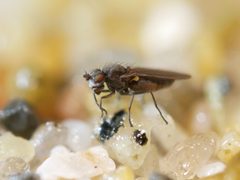
Canaceoides nudatus is a of beach fly in the Canacidae. Originally described as Canace nudata by Cresson in 1926, it was later transferred to the Canaceoides. Members of this family are associated with coastal marine environments. The species is documented from a small number of observations, indicating it may be uncommon or underreported.
Pronunciation
How to pronounce Canaceoides nudatus: /ˌkænəˈsiːɔɪdiːz njuːˈdeɪtəs/
These audio files are automatically generated. While they are not always 100% accurate, they are a good starting point.
Identification
Canaceoides nudatus can be distinguished from other Canacidae by the reduced or absent setation on the and legs, reflected in its specific epithet 'nudatus' (naked). The Canaceoides is separated from the closely related Canace by differences in wing venation and genitalic structure. Identification to level requires examination of male terminalia.
Images
Habitat
Coastal marine environments, including sandy beaches and rocky shorelines. Canacidae are typically found in the intertidal zone where they inhabit decaying seaweed and other organic debris.
Distribution
Documented from coastal localities in the eastern United States based on specimen records. The iNaturalist platform records 13 observations, suggesting a restricted or poorly sampled distribution.
Behavior
have been observed on wet sand and among decaying seaweed in the intertidal zone. Like other Canacidae, they are likely to be active during low tide when exposed substrate is available.
Ecological Role
Decomposer in coastal marine , contributing to nutrient cycling through consumption and processing of decaying organic matter, particularly seaweed.
Similar Taxa
- CanaceSimilar coastal and general , but Canaceoides differs in wing venation and genitalic structure. Canace generally possess more prominent thoracic setation.
- Canaceoides angulatusCongeneric sharing the same -level diagnostic features; distinguished by specific differences in male terminalia and body proportions.
More Details
Taxonomic history
Originally described in the Canace by Cresson (1926), this was later transferred to Canaceoides based on morphological revisions of the Canacidae. The basionym Canace nudata remains in synonymy.
Conservation status
Not evaluated by IUCN. Limited observation records suggest potential data deficiency, though this may reflect specialization rather than rarity.