
Canaceoides
Cresson, 1934
beach flies
Species Guides
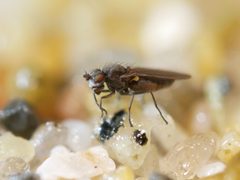
1Canaceoides is a of small flies in the Canacidae, commonly known as beach flies. The genus was established by Cresson in 1934 and comprises nine described . All known species are distributed across tropical and subtropical coastal regions of the Oriental, Neotropical, and Australasian biogeographic realms. Like other canacids, members of this genus are associated with marine shoreline .
Pronunciation
How to pronounce Canaceoides: /ˌkænæsiˈɔɪdiːz/
These audio files are automatically generated. While they are not always 100% accurate, they are a good starting point.
Identification
Canaceoides can be distinguished from other Canacidae by a combination of thoracic and abdominal setation patterns, wing venation characteristics, and male genitalic structures. Specific diagnostic features include the arrangement of dorsocentral and acrostichal setae on the , and the structure of the surstyli and epandrium in males. The genus is most similar to Canace but differs in details of the and leg chaetotaxy.
Images
Habitat
Coastal marine environments, particularly sandy beaches and rocky shorelines. are typically found in the supralittoral zone, the area above high tide mark where decaying seaweed and other organic debris accumulate.
Distribution
Oriental, Neotropical, and Australasian regions. Specific localities include Hawaii, Panama, and various localities across tropical Asia and the Pacific. The has not been recorded from the Afrotropical, Palearctic, or Nearctic regions.
Ecological Role
Members of this contribute to nutrient cycling in coastal by processing decaying marine organic matter, particularly stranded and other beach wrack.
Similar Taxa
- CanaceClosely related in the same ; Canaceoides differs in antennal structure and leg chaetotaxy details
- CanaconaAnother canacid ; Canaceoides is distinguished by thoracic setation patterns and male genitalia
More Details
Taxonomic history
The was erected by Cresson in 1934 with C. nudatus as the type . Wirth revised the genus in 1969, describing eight additional species and providing a comprehensive key to species.