
Sciara
Meigen, 1803
fungus gnats
Species Guides
1Sciara is a of fungus gnats in the Sciaridae. The genus has been extensively studied for its unusual genetics, particularly the selective elimination of paternal during early embryonic development. in this genus are small, delicate flies associated with moist environments rich in organic matter.
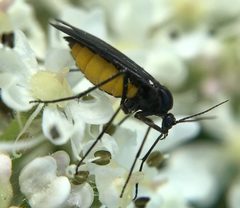
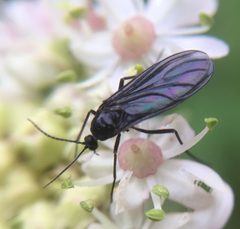
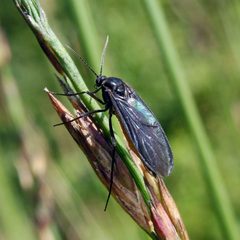
Pronunciation
How to pronounce Sciara: /ˈski.a.ra/
These audio files are automatically generated. While they are not always 100% accurate, they are a good starting point.
Identification
Distinguished from other sciarid by combinations of wing venation patterns, antennal structure, and male genitalia characteristics. Definitive identification to level often requires microscopic examination of genitalia. Separation from similar genera such as Bradysia and Lycoriella requires knowledge.
Images
Appearance
Small, delicate flies with slender bodies and long legs. have reduced wing venation characteristic of the Sciaridae. are long and bead-like (). Body coloration generally dark, often black or brown. Wings typically clear or lightly tinted.
Habitat
Moist environments rich in decaying organic matter, including forest floors, compost, mushroom beds, and damp soils. Larvae develop in substrates with fungal growth.
Distribution
Records from Denmark, Norway, and Sweden; broader distribution across temperate regions likely but not documented in provided sources.
Behavior
have been observed forming swarming , a common in sciarid flies.
Human Relevance
Some are known as pests in mushroom , where larval feeding damages mycelium and fruiting bodies. The has significant scientific importance as a model organism for studying and sex determination mechanisms.
Similar Taxa
- BradysiaOverlapping and ; distinguished by genitalia structure and antennal details
- LycoriellaSimilar in mushroom ; requires microscopic examination for separation
More Details
Genetic significance
Sciara exhibit a distinctive and well-studied mechanism of paternal elimination during early embryonic development, making them important model organisms for understanding and elimination.