
Diadocidia ferruginosa
(Meigen, 1830)
Diadocidia ferruginosa is a Palearctic fungus gnat in the Diadocidiidae. Larvae construct long dry silken tubes beneath bark or within decaying wood. The species has been associated with the fungal Peniophora. remains poorly documented.
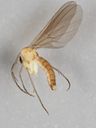
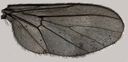
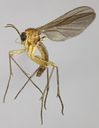
Pronunciation
How to pronounce Diadocidia ferruginosa: //ˌdaɪ.əˈdɒsɪˌdaɪə ˌfɛr.ʊ.dʒɪˈnoʊ.sə//
These audio files are automatically generated. While they are not always 100% accurate, they are a good starting point.
Identification
Distinguished from other Diadocidia by genitalia ; external features alone are insufficient for reliable identification. are small, slender flies typical of fungus gnats. Larval in silken tubes under bark or in rotten wood provides a useful field clue when reared from substrate.
Images
Habitat
Larvae inhabit long dry silken tubes constructed under bark or within rotten wood. Associated with decaying wood environments where fungal growth occurs.
Distribution
Palearctic region. Distribution records confirmed from Denmark, Norway, and Sweden.
Diet
Larvae probably feed on fungal mycelia or spores. Specific dietary details for are unknown.
Host Associations
- Peniophora - associated withfungal
Life Cycle
Larvae develop in silken tubes under bark or in rotten wood. and details are not documented.
Behavior
Larvae construct and inhabit long dry silken tubes, a distinctive behavioral trait among fungus gnats.
Ecological Role
Larvae function as mycophagous decomposers in decaying wood , contributing to nutrient cycling through consumption of fungal material.
Similar Taxa
- Other Mycetophilidae sensu latoFormerly classified in Mycetophilidae; Diadocidiidae now recognized as distinct based on morphological and molecular data. Diadocidia ferruginosa differs in larval tube construction and specific wood-decay microhabitat preferences.
More Details
Taxonomic History
Originally described as Mycetobia ferruginosa by Meigen in 1830. Long classified in Mycetophilidae, but now placed in Diadocidiidae based on phylogenetic studies. Form thoracica described by Okada in 1936 is now synonymized.