
Peracecis fugitiva
Gagné, 2013
Hackberry Blister Gall Midge
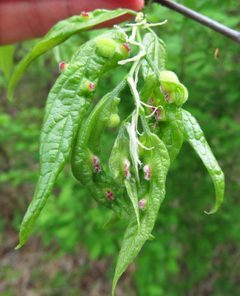
Peracecis fugitiva is a gall midge in the Cecidomyiidae, described by Gagné in 2013. It is commonly known as the Hackberry Blister Gall Midge due to its association with hackberry trees (Celtis ), where it induces blister-like galls on leaves. The species is part of a containing other gall-forming , though specific details of its remain limited in published literature.
Pronunciation
How to pronounce Peracecis fugitiva: //pɛˈræskɪs ˌfuːɡɪˈtiːvə//
These audio files are automatically generated. While they are not always 100% accurate, they are a good starting point.
Identification
Identification relies primarily on association with its distinctive leaf galls on hackberry and microscopic examination of . Adults are small, delicate flies with reduced wing venation characteristic of Cecidomyiidae. The blister galls on hackberry leaves are raised, often rounded or irregular swellings on the leaf surface. Definitive -level identification requires taxonomic knowledge and reference to the original description.
Images
Habitat
Found in areas where hackberry trees (Celtis ) occur, including riparian woodlands, forest edges, and urban plantings. Presence is tied directly to availability of host plants rather than specific type.
Distribution
Known from North America based on iNaturalist observations; precise native range unclear due to limited published distribution records. Observations span multiple U.S. states where hackberry occurs.
Seasonality
and gall formation likely coincide with hackberry leaf flush in spring, though specific timing undocumented in accessible literature.
Host Associations
- Celtis - Gall induction on leavesHackberry ; specific species unconfirmed in accessible sources
Ecological Role
As a gall inducer, modifies plant tissue to create protected microhabitats for larval development. Galls may influence leaf physiology and provide food or shelter for other organisms, though specific ecological interactions undocumented.
Human Relevance
Minor economic or aesthetic concern due to gall formation on ornamental hackberry trees. No significant pest status documented.
Similar Taxa
- Other Peracecis speciesSame , likely similar gall on related ; requires examination to distinguish
- Other Cecidomyiidae on CeltisMultiple gall midges attack hackberry; blister gall helps distinguish from other gall types (e.g., nipple galls, spindle galls)
More Details
Taxonomic recency
Described in 2013, making this a relatively recently recognized ; biological details may emerge with further study.
Observation-based knowledge
Much current understanding derives from citizen science observations (iNaturalist) rather than formal ecological study.