
Rhopalomyia ericameriae
Felt, 1916
Rosette Bud Gall Midge
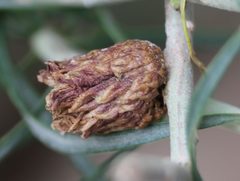
Rhopalomyia ericameriae is a gall midge in the Cecidomyiidae, commonly known as the Rosette Bud Gall Midge. The induces distinctive gall formations on plants. As a member of the Rhopalomyia, it belongs to one of the most diverse genera of gall midges, with many species specialized on Asteraceae hosts.
Pronunciation
How to pronounce Rhopalomyia ericameriae: /rɔʊpəˌloʊˈmɪiə ˌɛrɪkəˈmɛriaɪ/
These audio files are automatically generated. While they are not always 100% accurate, they are a good starting point.
Identification
Identification relies primarily on the distinctive gall structure produced on plants rather than . Adult gall midges in this are minute, delicate flies with reduced wing venation and long, bead-like . Specific diagnostic features for R. ericameriae require examination of larval or adult specimens by ; the is best recognized by its association with characteristic rosette bud galls on Ericameria species.
Images
Habitat
Associated with coastal scrub and chaparral where plants in the Ericameria occur. The is dependent on established stands of its host shrub for and development.
Distribution
Found in western North America, primarily in California and adjacent regions where Ericameria are native. Distribution corresponds closely to the range of its host plants in coastal and interior scrub .
Seasonality
and gall formation occur during the active growing season of plants; specific timing varies with local climate and host .
Diet
Larvae feed within plant tissue, inducing gall formation on Ericameria . The exact feeding mechanism and nutritional relationship with tissue has not been detailed in available sources.
Host Associations
- Ericameria - primary of shrubs in Asteraceae; specific not confirmed in available sources
Life Cycle
Like other Cecidomyiidae, development includes , larval, pupal, and stages. Larvae develop within plant galls, with occurring either within the gall or in soil. Detailed parameters for this have not been documented.
Ecological Role
As a gall inducer, the modifies plant growth and may influence resource allocation in affected shrubs. Galls potentially provide microhabitat for other organisms, though specific ecological interactions have not been documented for this species.
Human Relevance
No documented economic or medical significance. Occasionally encountered by botanists and entomologists studying gall-forming insects or surveying coastal scrub biodiversity.
Similar Taxa
- Other Rhopalomyia speciesNumerous induce similar gall types on related Asteraceae ; identification requires examination of specimens or host association records
- Asphondylia speciesAnother large of Cecidomyiidae that forms bud and flower galls on Asteraceae; galls may appear superficially similar but differ in internal structure and larval
More Details
Taxonomic note
The Catalogue of Life lists this name as a synonym, while GBIF and iNaturalist treat it as accepted. This discrepancy may reflect ongoing taxonomic revision or differences in source databases.
Gall morphology
The 'Rosette Bud Gall Midge' indicates formation of clustered, rosette-like growths at bud sites, though detailed gall descriptions were not found in available sources.