
Rhopalomyia audibertiae
Felt, 1907
Sage Leaf Gall Midge, White Sage Leaf Gall Midge
Rhopalomyia audibertiae is a gall midge in the Cecidomyiidae that induces distinctive leaf galls on white sage (Salvia apiana). The was described by Felt in 1907 and is commonly known as the sage leaf gall midge or white sage leaf gall midge. It has been documented in over 1,500 observations on iNaturalist, indicating it is relatively well-recorded where its plant occurs. The is part of a containing numerous species that specialize on sagebrush and related plants in the genus Artemisia and Salvia.
Pronunciation
How to pronounce Rhopalomyia audibertiae: //ˌroʊ.fə.loʊˈmaɪə ˌɔː.dɪˈbɛrti.aɪ//
These audio files are automatically generated. While they are not always 100% accurate, they are a good starting point.
Identification
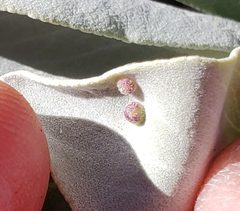
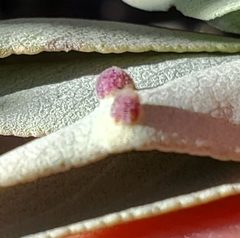
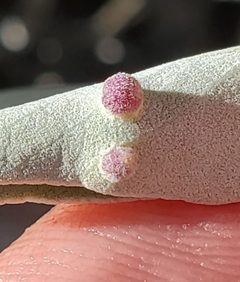
Identification relies primarily on the galls produced on plant leaves rather than direct examination of the . The galls appear as irregular swellings or distortions on white sage leaves. Adult cecidomyiids are minute, delicate flies with long and reduced wing venation; -level identification requires examination of genitalia and other microscopic features by a . The specific host association with Salvia apiana distinguishes this species from related Rhopalomyia species that attack Artemisia or other Salvia species.
Images
Habitat
Associated with stands of white sage (Salvia apiana), which grows in dry, open including coastal sage scrub, chaparral, and dry slopes in Mediterranean-type climates.
Distribution
Ranges with the distribution of its plant Salvia apiana, which is native to southern California and Baja California. Records concentrated in coastal and inland areas of southern California where white sage occurs naturally.
Host Associations
- Salvia apiana - obligateInduces leaf galls on white sage; specificity is the defining ecological feature of this
Ecological Role
As a gall-former, induces structural changes in plant leaves that create protected microhabitats for larval development. The galls may influence leaf physiology and potentially affect plant growth, though specific impacts have not been quantified. Gall midges in this serve as prey for and other natural enemies.
Human Relevance
White sage is culturally significant to peoples of southern California and is increasingly harvested for commercial sale; the gall midge is a natural component of healthy white sage and may serve as an indicator of plant origin from natural stands versus cultivated sources.
Similar Taxa
- Rhopalomyia spp.Numerous induce similar galls on Artemisia and other Salvia ; distinguished primarily by plant identity and subtle morphological differences in
- Other CecidomyiidaeMany gall midges produce leaf galls; identification to and requires association and microscopic examination
More Details
Nomenclatural Note
Catalogue of Life lists this as a 'synonym' in its status field, but this appears to reflect a taxonomic database artifact rather than accepted synonymy; GBIF and other sources treat R. audibertiae as an accepted valid species.
Observation Frequency
With over 1,500 iNaturalist observations, this is among the more frequently documented gall midge , likely due to the conspicuous nature of its galls on a popular and culturally significant plant.