
Harmandiola
Skuhravá, 1997
Harmandiola is a of gall midges ( Cecidomyiidae) comprising 14 described distributed across the Holarctic region. These small flies are notable for inducing galls on woody plants, specifically species of poplar (Populus), chestnut (Castanea), and hickory (Carya). The genus was established by Skuhravá in 1997. Species-level has been revised multiple times, with several species transferred from related genera.
Pronunciation
How to pronounce Harmandiola: /hɑːr.mæn.diˈoʊ.lə/
These audio files are automatically generated. While they are not always 100% accurate, they are a good starting point.
Identification
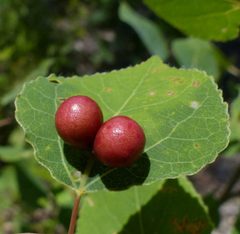
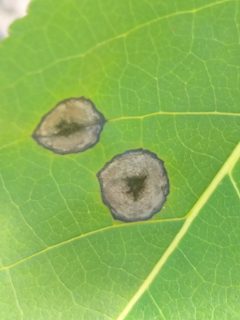
are minute flies typical of Cecidomyiidae, with reduced wing venation and bead-like with circumfilar loops. identification requires examination of larval galls or adult genitalia; gall on specific plants provides the most reliable field diagnostic. Larvae are small, legless, and found within plant tissue.
Images
Habitat
Associated with deciduous forests and woodlands containing trees: poplars (Populus spp.), chestnuts (Castanea spp.), and hickories (Carya spp.). Gall formation occurs on leaves and shoots of these trees.
Distribution
Holarctic region; recorded from Denmark, Norway, Sweden, and the northeastern United States (Vermont). Distribution corresponds to ranges of tree .
Diet
Larvae feed on plant tissue within induced galls on Populus, Castanea, and Carya . Specific feeding mechanisms and nutritional have not been described in detail.
Host Associations
- Populus - gall induction on leaves/shoots
- Castanea - gall induction on leaves/shoots
- Carya - gall induction on leaves/shoots
Life Cycle
Complete with gall-forming larval stage. Specific details of deposition, sites, and stages are not documented for most . Multiple per year have been suggested for some species but not confirmed.
Behavior
Induces characteristic galls on plant foliage. Gall formation represents the primary known behavioral interaction with host plants. outside of host-seeking and mating is poorly documented.
Ecological Role
Acts as a gall-forming herbivore on woody angiosperms. Galls modify plant resource allocation and may provide microhabitat for secondary inhabitants, though specific ecological relationships remain unstudied.
Human Relevance
Minor economic significance; galls may cause aesthetic damage to ornamental poplars, chestnuts, and hickories. Not known as a significant pest of commercial forestry or nut production.
Similar Taxa
- Cecidomyiidae (other gall midge genera)Many cecidomyiid induce similar leaf galls on Populus; accurate identification requires gall and specificity, or examination of genitalia
- Pemphigus that also forms galls on Populus; galls differ in structure and contain aphid nymphs rather than larvae