
Caryomyia stellata
Gagné, 2008
Hickory Starry-base Gall Midge
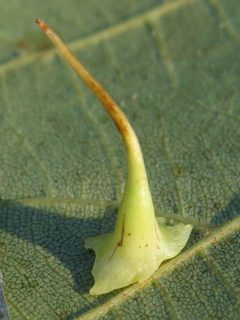
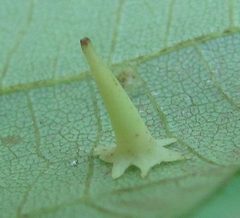
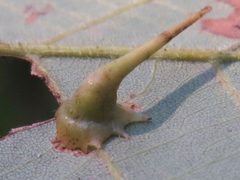
Caryomyia stellata is a gall midge in the Cecidomyiidae, described by Gagné in 2008. It induces distinctive galls on hickory trees (Carya spp.), specifically forming star-shaped structures at the base of leaf petioles or twigs. The is part of a of gall midges specialized on hickory . Like other cecidomyiids, it has a complete with larvae developing inside plant tissue.
Pronunciation
How to pronounce Caryomyia stellata: //ˌkæri.oʊˈmaɪə stɛˈlɑːtə//
These audio files are automatically generated. While they are not always 100% accurate, they are a good starting point.
Identification
The galls induced by Caryomyia stellata are characterized by a star-shaped or radiating base structure on hickory, distinguishing them from other Caryomyia . The specific epithet 'stellata' refers to this star-like appearance of the gall base. are tiny, delicate flies typical of the Cecidomyiidae, with reduced wing venation and long, bead-like . Accurate identification to species level typically requires examination of the gall or adult specimens by a .
Images
Habitat
Associated with hickory trees (Carya spp.) in deciduous forests, woodlands, and areas where hickory occur. The presence of suitable plants is the primary requirement.
Distribution
Eastern North America, where hickory (Carya) are native. Specific distribution records are limited in the provided sources, but the Caryomyia is primarily North American.
Diet
Larvae feed on plant tissue within galls induced on hickory trees. do not feed.
Host Associations
- Carya - gall inducerHickory ; specific species not detailed in sources
Life Cycle
are laid on hickory plants. Larvae induce star-shaped galls at the base of leaf petioles or on twigs, developing within the gall tissue. occurs within the gall. emerge to mate and continue the cycle. Specific timing of is not documented in available sources.
Ecological Role
As a gall inducer, modifies hickory plant tissue to create protected microhabitats for larval development. The galls may serve as food sources or microhabitats for other organisms, though specific or are not documented.
Similar Taxa
- Other Caryomyia speciesSame , all induce galls on hickory; distinguished by gall , particularly the star-shaped base of C. stellata
- Other Cecidomyiidae on CaryaDifferent of gall midges may also use hickory ; require examination to distinguish
More Details
Taxonomic note
The specific epithet 'stellata' directly references the star-shaped base of the gall, providing a diagnostic feature for field identification of the gall structure.
Sources and further reading
- BugGuide
- GBIF taxonomy match
- iNaturalist taxon
- Catalogue of Life
- Bug Eric: Spider Sunday: Star-bellied Orbweaver, Acanthepeira stellata
- Bug Eric: Spider Sunday: Starbellied Orbweaver
- Megalopygidae | Beetles In The Bush
- A Riot of Colors | Beetles In The Bush
- These are a few of my favorite trees | Beetles In The Bush
- Cynipidae | Beetles In The Bush