
Asphondylia ceanothi
Felt, 1908
Ceanothus Bud Gall Midge
Asphondylia ceanothi is a gall midge in the Cecidomyiidae that induces bud galls on Ceanothus plants. The was described by Felt in 1908. Like other Asphondylia species, it manipulates plant tissue to form a protective gall structure where the larva develops. The specific plant association is with Ceanothus species, a of flowering shrubs in the buckthorn family.
Pronunciation
How to pronounce Asphondylia ceanothi: /æs.fɒnˈdaɪ.li.ə ˌsiː.əˈnəʊ.θaɪ/
These audio files are automatically generated. While they are not always 100% accurate, they are a good starting point.
Identification
The is identified by its association with distinctive bud galls on Ceanothus plants. The gall structure distinguishes it from other Asphondylia species that attack different plants or plant parts. Confirmation requires examination of specimens and association with the specific host plant Ceanothus.
Images
Appearance
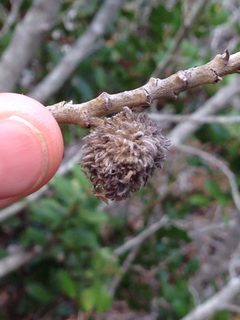
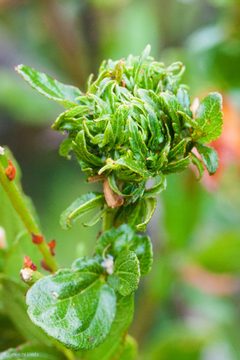
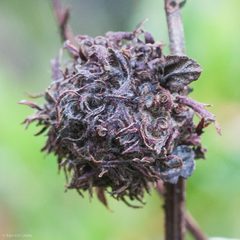
are small, mosquito-like flies typical of gall midges, with long and reduced wing venation. Larvae are minute, legless maggots found within galls. The galls themselves appear as swollen, modified buds on Ceanothus stems.
Habitat
Associated with Ceanothus shrubs, which occur in chaparral, coastal scrub, and woodland in western North America. The inhabits the developing buds of these plants.
Distribution
Western North America, where Ceanothus plants occur. Specific range details are limited in available sources.
Diet
Larvae feed on plant tissue within the gall. do not feed; their mouthparts are reduced or non-functional, as is typical for many Cecidomyiidae.
Host Associations
- Ceanothus - obligateInduces bud galls on this
Life Cycle
Females deposit into developing buds of Ceanothus. Larvae induce gall formation and feed within the modified bud tissue. Development continues through larval instars inside the gall. occurs within the gall, with emerging to mate and seek new buds. The precise timing of is not documented in available sources.
Behavior
Induces gall formation through chemical manipulation of plant tissue, a characteristic of gall midges. The mechanism involves secretions that redirect plant growth patterns to create a protective structure and food source for the developing larva.
Ecological Role
Acts as a herbivore on Ceanothus. The galls provide for the and potentially for or , though specific ecological relationships are not documented in available sources.
Human Relevance
Minor significance. May be noticed by botanists or naturalists observing Ceanothus plants. No documented economic importance or management concerns in available sources.
Similar Taxa
- Asphondylia ilicicolaAnother Asphondylia that induces galls on fruits rather than buds; attacks Ilex (holly) rather than Ceanothus, producing green berries instead of red ones
- Other Asphondylia speciesNumerous exist, many inducing galls on different plants or plant parts; identification requires host association and gall
More Details
Taxonomic note
The epithet 'ceanothi' reflects its association with the plant Ceanothus, following a common naming convention in gall-forming insects.
Sources and further reading
- BugGuide
- Wikipedia
- GBIF taxonomy match
- iNaturalist taxon
- Catalogue of Life
- Deck the halls with boughs of holly adorned with cheery red and green berries! Green is good for holly berry midge, Asphondylia ilicicola — Bug of the Week
- Deck the halls with boughs of holly…and the Native holly leafminer, 'Phytomyza ilicicola', and Holly berry midge, 'Asphondylia ilicicola' — Bug of the Week
- Green is good - Holly berry midge, Asphondylia ilicicola — Bug of the Week
- Green is good for holly berry midge, Asphondylia ilicicola — Bug of the Week
- Bug Eric: A Potential New Host Record for Calliephialtes grapholithae (Hymenoptera: Ichneumonidae) from a Paper Wasp nest (Hymenoptera: Vespidae: Polistes metricus)
- The Insects Behind the Weird Growths on Plants