
Asphondylia atriplicis
(Townsend, 1893)
Tumor Stem Gall Midge
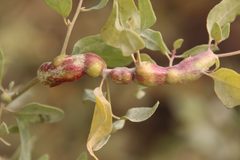
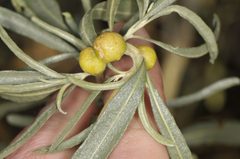
Asphondylia atriplicis is a gall midge in the Cecidomyiidae that induces distinctive tumor-like stem galls on plants in the Atriplex (saltbushes). Like other Asphondylia , the female deposits into plant tissue, and the developing larva stimulates the plant to form a protective gall structure that provides both shelter and nutrition. The specific epithet 'atriplicis' indicates its association with Atriplex hosts. The genus Asphondylia is notable for inducing galls on diverse plant families and for often harboring symbiotic fungi that may assist in gall formation or nutrition.
Pronunciation
How to pronounce Asphondylia atriplicis: /æsˌfɒnˈdɪliə æˈtrɪplɪs/
These audio files are automatically generated. While they are not always 100% accurate, they are a good starting point.
Images
Habitat
Associated with Atriplex (saltbush) , which typically grow in saline, alkaline, or disturbed soils including coastal areas, salt flats, desert washes, and agricultural fields. The 's is thus tied to the distribution of its plants in arid and semi-arid environments.
Distribution
Known from western North America; the type locality and primary distribution corresponds to regions where Atriplex are native or naturalized, including the southwestern United States and adjacent Mexico. Specific documented localities require further verification.
Diet
The larva feeds on plant tissue within the gall it induces on Atriplex stems. The exact nutritional relationship—whether the larva feeds directly on plant tissue, on fungal cultured within the gall, or both—has not been definitively established for this .
Host Associations
- Atriplex - Gall induction on stems; specific within the not definitively documented.The specific epithet 'atriplicis' indicates association with this .
Life Cycle
females deposit into developing Atriplex stems. Larval feeding induces formation of a tumor-like stem gall. Larvae develop within the gall, pupate, and emerge as adults. The number of per year and stage are not documented.
Behavior
Induces distinct tumor-like galls on plant stems. The gall structure provides physical protection and a food source for the developing larva.
Ecological Role
As a gall inducer, modifies plant growth and resource allocation. The galls may serve as microhabitats for other organisms (, ) though specific associates for this are not documented.
Similar Taxa
- Asphondylia ilicicolaBoth are Asphondylia that induce galls on plant reproductive structures, but A. ilicicola specifically targets Ilex (holly) berries rather than Atriplex stems.
- Other Asphondylia species on AtriplexMultiple Asphondylia may occur on Atriplex; distinguishing features of galls and require examination.
Sources and further reading
- BugGuide
- GBIF taxonomy match
- iNaturalist taxon
- NCBI Taxonomy
- Catalogue of Life
- Deck the halls with boughs of holly adorned with cheery red and green berries! Green is good for holly berry midge, Asphondylia ilicicola — Bug of the Week
- Deck the halls with boughs of holly…and the Native holly leafminer, 'Phytomyza ilicicola', and Holly berry midge, 'Asphondylia ilicicola' — Bug of the Week
- Green is good - Holly berry midge, Asphondylia ilicicola — Bug of the Week
- Green is good for holly berry midge, Asphondylia ilicicola — Bug of the Week
- The Insects Behind the Weird Growths on Plants
- Archive — Bug of the Week