
Scatopsini
Genus Guides
3Scatopsini is a tribe of minute black scavenger flies in the Scatopsidae. Members are small, dark-colored Diptera typically found in moist, decaying organic matter. The tribe contains such as Scatopse and Rhexoza. are often observed in swarms near their larval .
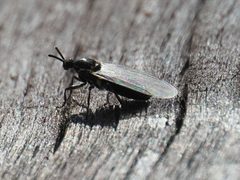
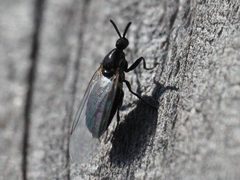
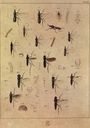
Pronunciation
How to pronounce Scatopsini: //skætəpˈsiːnaɪ//
These audio files are automatically generated. While they are not always 100% accurate, they are a good starting point.
Images
Habitat
Larval development occurs in moist, decaying organic substrates including rotting wood, leaf litter, compost, , and fungal fruiting bodies. frequent shaded, humid microhabitats near larval development sites.
Distribution
Widespread across temperate and tropical regions; documented from North America, Europe, Asia, Africa, Australia, and various oceanic islands.
Diet
Larvae feed on decomposing organic matter and associated microorganisms. feeding habits are poorly documented; may consume nectar or liquid exudates.
Life Cycle
Complete with , larval, pupal, and stages. Larvae are elongated, legless, and inhabit decaying substrates. occurs within or near the larval substrate.
Behavior
form small to large or swarms near larval , particularly at dusk or in shaded conditions. Swarming facilitates mating.
Ecological Role
Decomposers that contribute to nutrient cycling in terrestrial . Larvae break down decaying plant matter and fungi, facilitating microbial decomposition.
Human Relevance
Generally harmless; occasionally abundant in compost or manure where they may be noticed but do not cause damage. No known medical or economic significance.
Similar Taxa
- AnapausiniAnother tribe in Scatopsidae; distinguished by subtle differences in wing venation and genitalia structure, requiring microscopic examination.
- CoboldiiniTribe in Scatopsidae with overlapping ; separation based on antennal structure and male terminalia characteristics.