
Hesperinus brevifrons
Walker, 1848
Hesperinus brevifrons is a of fly in the Hesperinidae, a small and poorly studied group within the order Diptera. The species was described by Francis Walker in 1848. Members of Hesperinidae are sometimes referred to as 'hesperinid flies' and are characterized by their distinctive wing venation and relatively robust body form compared to related families. Very little is known about the or of this particular species.
Pronunciation
How to pronounce Hesperinus brevifrons: /hɛˈspɛrɪnəs ˈbrɛvɪfrɒnz/
These audio files are automatically generated. While they are not always 100% accurate, they are a good starting point.
Identification
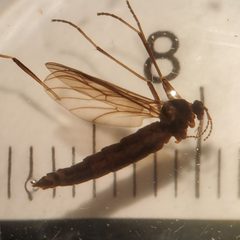
Hesperinus brevifrons can be distinguished from other Hesperinus by the short frontal region of the , as indicated by the specific epithet 'brevifrons' (short-). The Hesperinidae is separated from the closely related Bibionidae by differences in wing venation, particularly the arrangement of crossveins in the radial sector. Accurate identification to species level requires examination of male genitalia and other subtle morphological features.
Images
Distribution
Records indicate occurrence in the Palearctic region, with historical collections from Europe. The sparse iNaturalist observations (5 records) suggest the is rarely encountered or underreported.
Similar Taxa
- Hesperinus rohdendorfiAnother in the same , distinguished by differences in and male genitalia structure
- Bibio spp.Members of the related Bibionidae share general body form but differ in wing venation patterns and typically have more prominent spurs on the tibiae
More Details
Taxonomic history
Hesperinidae has been treated historically as a of Bibionidae, but recent classifications recognize it as a distinct . This reclassification reflects differences in and presumed larval .
Data deficiency
The Hesperinidae contains only two extant (Hesperinus and Prahesperinus) with very few described . Most species are known from limited material, and the stages remain undescribed for many including H. brevifrons.