
Hesperinus
Walker, 1848
Species Guides
1Hesperinus is the sole in the relict Hesperinidae, a small group of nematoceran flies in the infraorder Bibionomorpha. The genus contains approximately 8 extant distributed primarily across the Palaearctic region, with single species in the Nearctic and Neotropical regions. Three fossil species have been described from Eocene Baltic amber. The family represents a phylogenetically isolated lineage with limited ecological and biological documentation.
Pronunciation
How to pronounce Hesperinus: //ˌhɛspəˈraɪnəs//
These audio files are automatically generated. While they are not always 100% accurate, they are a good starting point.
Identification
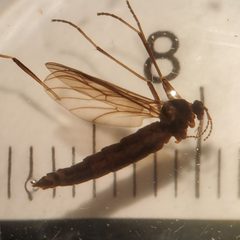
Distinguished from other Bibionomorpha by the combination of long 12-segmented , elongate body proportions, and marked in wing development. Females are recognizable by their short, reduced wings compared to fully winged males. The Hesperinidae is phylogenetically isolated and lacks close living relatives, reducing risk of confusion with similar-appearing .
Images
Habitat
Most have been collected near streams in woodland environments. Specific microhabitat requirements remain poorly documented.
Distribution
Primarily Palaearctic; approximately 8 extant with one species each in the Nearctic and Neotropical regions. Three fossil species known from Eocene Baltic amber deposits.
Life Cycle
Larvae of Hesperinus ninae and H. rohdendorfi have been described; a key to larvae of Hesperinus exists. Detailed progression and developmental timing are not documented.
More Details
Phylogenetic significance
Hesperinidae is considered a relict representing an ancient lineage within Bibionomorpha, with no close living relatives. This phylogenetic isolation makes the of particular interest for understanding nematoceran evolution.
Taxonomic history
The was established by Walker in 1848. The has been variously classified, with Catalogue of Life currently placing it within Bibionidae as Hesperininae, though most sources recognize it as a distinct family.