
Mycetobia divergens
Walker, 1856
wood gnat
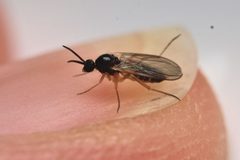
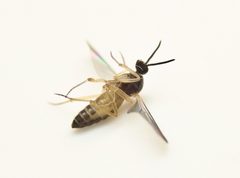
Mycetobia divergens is a of wood gnat in the Anisopodidae, first described by Francis Walker in 1856. The Mycetobia is the type genus of the Mycetobiinae within this small family of nematoceran flies. Wood gnats in this family are generally associated with decaying wood and fungal . Specific biological details for M. divergens remain poorly documented in published literature.
Pronunciation
How to pronounce Mycetobia divergens: /maɪˈsɛtoʊbiə daɪˈvɜrdʒənz/
These audio files are automatically generated. While they are not always 100% accurate, they are a good starting point.
Identification
Mycetobia divergens can be distinguished from other Anisopodidae by genitalic and wing venation characters typical of the Mycetobia. The epithet "divergens" likely refers to divergent wing or other divergent morphological structures, though the original description by Walker (1856) would need to be consulted for precise diagnostic features. Separation from other Mycetobia species requires examination of or taxonomic keys.
Images
Habitat
Members of Anisopodidae are typically found in moist, decaying wood and fungal environments. The specific preferences of M. divergens have not been documented separately from the general -level characterization.
Distribution
The precise geographic distribution of M. divergens is not well established in available sources. The Mycetobia has a Holarctic distribution, with recorded from North America, Europe, and Asia.
Ecological Role
As with other Anisopodidae, M. divergens likely participates in nutrient cycling through association with decaying wood and fungal substrates. Larval stages of related are known to feed on decaying organic matter, contributing to decomposition processes in forest .
Human Relevance
Mycetobia divergens has no documented economic or medical importance to humans. The Anisopodidae is not known to contain pest or .
Similar Taxa
- Other Mycetobia speciesCongeneric share the general body plan and associations of wood gnats; precise identification requires examination of subtle morphological differences in wing venation and genitalia.
- Other Anisopodidae genera (e.g., Anisopus, Sylvicola)These share the -level characteristics of wood gnats but differ in details of wing venation, antennal structure, and body proportions.
More Details
Taxonomic history
Mycetobia divergens was described by Francis Walker in 1856. The Mycetobia was established by Meigen in 1818 and serves as the type genus for the Mycetobiinae. The Anisopodidae has undergone various taxonomic revisions, with some authorities previously treating Mycetobiinae as a separate family or as part of the broader Mycetophilidae sensu lato.
Data limitations
This is represented by only 22 observations on iNaturalist as of the knowledge cutoff, indicating it is rarely encountered or underreported. Published biological studies specifically addressing M. divergens appear to be lacking in the accessible literature.