
Penniverpa festina
(Coquillett, 1893)
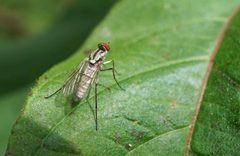
Penniverpa festina is a of stiletto fly in the Therevidae, described by Coquillett in 1893. Stiletto flies are predatory as larvae, inhabiting sandy soils where they feed on other . are generally found in open, sunny and are known for their slender bodies and distinctive wing venation. This species is part of a diverse within a family containing approximately 1,000 described species worldwide.
Pronunciation
How to pronounce Penniverpa festina: /ˈpɛnɪˌvɛrpə fɛsˈtiːnə/
These audio files are automatically generated. While they are not always 100% accurate, they are a good starting point.
Identification
As a member of Therevidae, Penniverpa festina likely exhibits the -diagnostic features: a slender, elongate body; long, thin legs; and a characteristic wing venation with a distinct 'therevid' venation pattern including a forked R4+5 . -level identification within Penniverpa requires examination of male genitalia and subtle differences in coloration and body proportions. The Penniverpa is distinguished from related therevid genera by specific combinations of antennal and leg characteristics, though precise diagnostic features for P. festina specifically are not well documented in general literature.
Images
Habitat
Based on -level and the 251 iNaturalist observations, this inhabits open, dry environments with sandy or well-drained soils. Therevid larvae require loose substrates for burrowing and hunting; frequent sun-exposed areas including grasslands, coastal dunes, and open woodlands.
Distribution
Documented observations indicate presence in North America, with the described from material collected in the United States. The exact range boundaries are not precisely defined in available sources.
Ecological Role
As a therevid fly, the larval stage functions as an in sandy soil , potentially contributing to of other soil-dwelling arthropods. feeding habits are poorly documented for this .
Similar Taxa
- Other Penniverpa speciesCongeneric share the same general body plan and preferences; accurate separation requires detailed morphological examination, particularly of male terminalia.
- Thereva speciesMembers of the Thereva occupy similar and share the stiletto fly body form; they differ in specific wing venation details and genitalic structure.
- Other Therevidae generaMultiple within Therevidae exhibit convergent slender body ; antennal structure and wing patterns provide primary separation at the generic level.
More Details
Taxonomic history
Originally described by Daniel William Coquillett in 1893, this has remained within the Penniverpa throughout its taxonomic history. The genus is part of the therevine lineage within Therevidae, a group that has undergone significant revision in recent decades.
Observation data
The 251 iNaturalist observations suggest this is among the more frequently encountered therevid in its range, though this may reflect observer effort and accessibility rather than true abundance.