
Pseudonomoneura
Bequaert, 1961
Species Guides
5Pseudonomoneura is a of mydas flies ( Mydidae) comprising seven described distributed in western North America, particularly in arid and semi-arid regions of the southwestern United States and northwestern Mexico. The genus was established by Bequaert in 1961 to accommodate species previously placed in related genera. are generally robust, moderately sized flies with distinctive wing venation characteristic of the family.
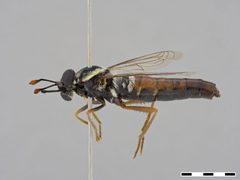
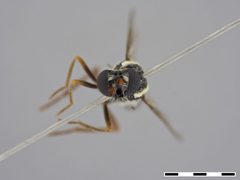
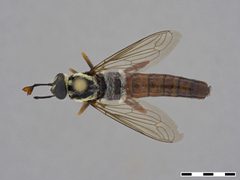
Pronunciation
How to pronounce Pseudonomoneura: /ˌsjʊdəˌnɒməˈnjʊərə/
These audio files are automatically generated. While they are not always 100% accurate, they are a good starting point.
Identification
Members of Pseudonomoneura can be distinguished from related mydasid by combinations of antennal structure, wing venation patterns, and male genitalia . The genus is most readily separated from Nomoneura by differences in the number and arrangement of antennal flagellomeres and details of the wing anal lobe. -level identification requires examination of male terminalia and is based primarily on genitalic characters described by Fitzgerald and Kondratieff (1995, 1997).
Images
Habitat
occur in xeric and semi-xeric environments including desert scrub, chaparral, and dry grassland . Specific associations vary by species: P. californica and P. tinkhami are documented from coastal and interior California; P. bajaensis and P. nelsoni from Baja California and adjacent regions; P. calderwoodi from Arizona; and P. hirta and P. micheneri from broader southwestern distributions.
Distribution
Western North America: southwestern United States (California, Arizona) and northwestern Mexico (Baja California, Baja California Sur, Sonora).
Seasonality
activity occurs primarily during spring and early summer months (April–July), with peak timed to correspond with flowering periods of associated vegetation. Specific varies by locality and elevation.
Similar Taxa
- NomoneuraClosely related in Mydidae; distinguished by antennal flagellomere count and wing venation details, particularly the structure of the anal lobe and radial configuration.
- MydasLarger mydasid with overlapping distribution; Pseudonomoneura are generally smaller with different antennal proportions and reduced wing pigmentation patterns.