
Opomydas townsendi
(Williston, 1898)
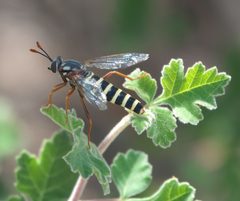
Opomydas townsendi is a of mydas fly ( Mydidae), a group of large, predatory flies known for their elongated bodies and distinctive wing venation. The species was originally described as Ectyphus townsendi by Williston in 1898 and later transferred to the Opomydas. It is to New Mexico, where it inhabits arid and semi-arid environments. Like other mydas flies, are likely predatory or nectar-feeding, though specific behavioral details remain poorly documented.
Pronunciation
How to pronounce Opomydas townsendi: /ˌoʊpoʊˈmaɪdəs ˈtaʊnzɛndi/
These audio files are automatically generated. While they are not always 100% accurate, they are a good starting point.
Images
Habitat
Arid and semi-arid environments in New Mexico, including juniper-oak-pinyon woodlands and adjacent grassland-shrubland . The occurs in areas with sandy soils and sparse vegetation typical of the southwestern United States.
Distribution
to New Mexico, United States. Documented from multiple localities across the state including eastern and southeastern regions.
More Details
Taxonomic History
Originally described as Ectyphus townsendi by Samuel Wendell Williston in 1898, this was later transferred to the Opomydas, which currently contains approximately 10 described species distributed in the southwestern United States and Mexico. The genus Opomydas is distinguished from related mydas fly genera by specific characters of the wing venation and male genitalia.
Conservation Status
Not formally assessed by IUCN or other conservation bodies. The appears to be locally common within its restricted range based on iNaturalist observations (43 records as of source date), but comprehensive data are lacking.