
Systoechus candidulus
Loew, 1863
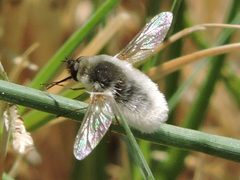
Systoechus candidulus is a of bee fly in the Bombyliidae, first described by Loew in 1863. It is known from Ontario, Canada, and across most of the United States. The species is distinguished from the related Bombylius by activity timing—Systoechus species tend to be active in fall rather than spring. Its larvae are of , a trait that differs from the lifestyle of many other bombyliid larvae.

Pronunciation
How to pronounce Systoechus candidulus: /sɪsˈtiːkəs kænˈdɪdʒʊləs/
These audio files are automatically generated. While they are not always 100% accurate, they are a good starting point.
Identification
of Systoechus can be distinguished from Bombylius by the position of the r-m crossvein on the wing. Members of Systoechus tend to be active as adults in the fall, whereas Bombylius are more typically spring-active. The Systoechus is placed in tribe Bombyliini based on these wing venation characters.
Images
Habitat
Found in sand prairie remnants and open sandy ground . One observation records an resting on sandy ground in a sand prairie remnant in the Mississippi lowlands of southeastern Missouri.
Distribution
Ontario, Canada, and across most of the United States.
Seasonality
are active in fall, in contrast to the spring activity of related Bombylius .
Diet
Larvae are of . diet not explicitly documented, though many bee flies are known to feed on nectar.
Host Associations
- grasshopper eggs - Larvae prey on in the soil
Life Cycle
Larvae develop as of . Specific details of egg-laying , larval instars, and not documented for this .
Behavior
are skittish and difficult to approach, a trait shared with many bee flies. One observed individual was seen resting on sandy ground before attempting when disturbed.
Ecological Role
Larval on may contribute to grasshopper in open .
Similar Taxa
- BombyliusSimilar appearance and shared tribe Bombyliini; distinguished by wing venation (position of r-m ) and seasonality (spring vs. fall)
More Details
Taxonomic history
First described by Hermann Loew in 1863. The Systoechus remains taxonomically challenging, with identification often requiring examination of wing venation characters.