
Trigonomiminae
Genus Guides
3- Bromleyus
- Haplopogon
- Holcocephala(Gnat Ogres)
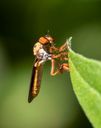
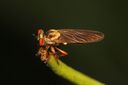
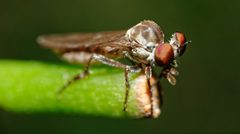
Trigonomiminae is a of robber flies (Asilidae), a diverse group of predatory dipterans. Members are characterized by their predatory lifestyle and are part of one of the largest of flies. The subfamily is distinguished by specific morphological traits that separate it from other asilid subfamilies. They occur across multiple continents and are active during warmer months.
Pronunciation
How to pronounce Trigonomiminae: /trɪˌɡoʊnəˈmɪmɪneɪ/
These audio files are automatically generated. While they are not always 100% accurate, they are a good starting point.
Identification
Images
Distribution
Occurs in the Americas, Africa, and Asia. Records span tropical to temperate regions across these continents.
Seasonality
activity peaks during spring and summer months in temperate regions; year-round activity likely in tropical areas.
Ecological Role
within terrestrial , contributing to regulation of other insect .
Similar Taxa
- AsilinaeLargest and most widespread asilid ; Trigonomiminae differs in male genitalia structure and specific wing venation characters
- LaphriinaeAnother robber fly ; Trigonomiminae separated by distinct hypopygium and facial profile
- DasypogoninaeOverlaps in distribution; distinguished by antennal structure and leg spine patterns
More Details
Taxonomic History
Trigonomiminae was established based on distinctive morphological characteristics, particularly of the male terminalia, that warranted status separate from the more broadly defined Asilinae. The classification has been refined through phylogenetic studies of Asilidae.
Research Status
Limited published ecological or behavioral studies exist at the level; most research focuses on -level Asilidae characteristics or -level revisions within Trigonomiminae.