
Lasiopagon pacificus
Cole & Wilcox, 1938
Pacific Sandpirate
Lasiopogon pacificus is a of robber fly in the Asilidae, commonly known as the Pacific Sandpirate. It was described by Cole and Wilcox in 1938. The species belongs to a of predatory flies that inhabit sandy environments. As with other Asilidae, it is presumed to be an active aerial of other insects. Available records indicate limited observation data, with approximately 20 documented sightings on iNaturalist.
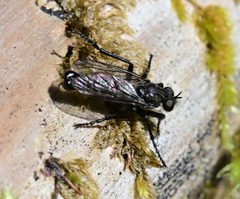
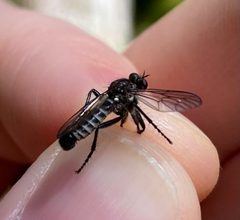
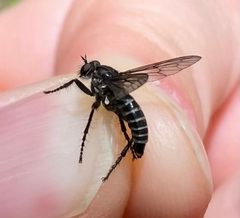
Pronunciation
How to pronounce Lasiopagon pacificus: /ˌlæsi.oʊˈpoʊgɒn pəˈsɪfɪkəs/
These audio files are automatically generated. While they are not always 100% accurate, they are a good starting point.
Images
Distribution
The specific epithet 'pacificus' and 'Pacific Sandpirate' suggest a distribution along the Pacific coast of North America, though precise range boundaries are not well-documented in available sources. The has been recorded in western North American regions based on limited observation data.
More Details
Taxonomic Note
Lasiopogon pacificus is distinct from Ixodes pacificus, the western blacklegged tick, despite similar specific epithets. The Ixodes pacificus is a significant of in the western United States, but the two belong to entirely different orders (Diptera vs. Acari) and have no biological relationship.
Sources and further reading
- BugGuide
- GBIF taxonomy match
- iNaturalist taxon
- NCBI Taxonomy
- Catalogue of Life
- It Started Out as a Quiet, End-of-the-Year Hike Near Lake Berryessa... | Bug Squad
- Spring Conditions Predict Following Year's Tick Activity in Northern California
- Cold-Season Temperature and Rainfall Drive Climate Suitability for Ticks in California
- CDC Study Shares County Maps of 7 Diseases Spread by Blacklegged Ticks
- Mapping Lyme: CDC Reveals Distribution of Lyme Disease-Causing Bacteria by County
- Ticks that Transmit Lyme Disease Reported in 48.6% of U.S. Counties