
Laphria astur
Osten Sacken, 1877
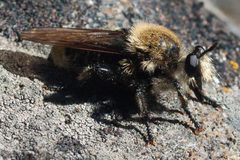
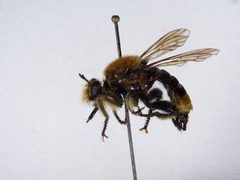
Laphria astur is a of robber fly in the Asilidae, Laphria. Members of this genus are notable for their convincing mimicry of bumble bees and carpenter bees, which provides protection from and facilitates ambush on unsuspecting prey. Like other Laphria species, L. astur likely employs this mimicry to approach small flying beetles and other insects that would otherwise flee from an obvious predator. The genus name derives from Greek mythology, though specific etymology for the epithet 'astur' is not documented in available sources.
Pronunciation
How to pronounce Laphria astur: /ˈlæf.ri.ə ˈæs.tʊər/
These audio files are automatically generated. While they are not always 100% accurate, they are a good starting point.
Identification
Laphria astur can be distinguished from other robber fly by its -like appearance: a stout, hairy body with banded coloration mimicking Bombus or Xylocopa . Within the genus Laphria, species-level identification requires examination of specific setal patterns, facial mystax , and leg coloration. Laphria species differ from the superficially similar Mallophora (another bumble bee mimic) by having thick, rather than thin, terminal antennal segments.
Images
Similar Taxa
- MallophoraAnother effective mimic in Asilidae; distinguished from Laphria by thin terminal antennal segment and generally hairier appearance
- PromachusLarge predatory robber flies in same , but lack mimicry and have more elongated, less hairy bodies with distinctive abdominal patterning
- Microstylum morosumNorth America's largest robber fly; much larger (35–50 mm), with streamlined, nearly glabrous body and prominent emerald , lacking the dense pile of Laphria