
Andrenosoma hesperium
Martin, 1966
Golden-horned Chiselmouth
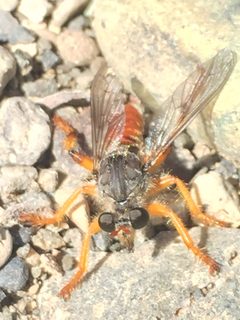
Andrenosoma hesperium is a of robber fly in the Asilidae, Laphriinae. Described by Martin in 1966, this western North American species is one of six Andrenosoma species occurring in North America, with four species restricted to Texas, one to eastern North America (A. fulvicaudum), and A. hesperium occurring only in the western United States. Like other laphriine robber flies, its larvae are of wood-boring larvae.
Pronunciation
How to pronounce Andrenosoma hesperium: /ændrɛnəˈsoʊmə hɛˈspɪriəm/
These audio files are automatically generated. While they are not always 100% accurate, they are a good starting point.
Identification
Andrenosoma hesperium is distinguished from the eastern North American A. fulvicaudum by geographic range, with A. hesperium restricted to the western United States. Within the , it may be distinguished from the four Texas- by distribution. Specific morphological diagnostic features for A. hesperium are not documented in available sources. are likely to show the general laphriine robber fly characteristics: robust body, predatory stance, and coloration patterns typical of the genus.
Images
Habitat
Dry, sandy locations with exposed woody substrates including logs, stumps, and tree trunks in sunny conditions. Associated with pine forests and recently burned forests that provide for wood-boring larvae.
Distribution
Western United States only. The Andrenosoma reaches its greatest diversity in the Neotropics.
Diet
are predatory, capturing and feeding on small insects. Larvae are specialized of wood-boring larvae ( Buprestidae and Cerambycidae).
Life Cycle
Complete with , larva, pupa, and stages. Larvae develop in dead wood, feeding on wood-boring larvae. occurs in characteristic pupal cases that may protrude from holes in wood.
Behavior
are sit-and-wait that perch on exposed woody substrates in sunny locations to ambush prey. They are attracted to recently burned forests.
Ecological Role
of wood-boring larvae during larval stage; on small insects. Contributes to regulation of wood-boring beetle in forest .
Similar Taxa
- Andrenosoma fulvicaudumEastern North American distinguished by geographic range; has reddish posteriodorsal abdominal markings and similar preferences but occurs east of the Great Plains.
- Other Andrenosoma speciesFour additional restricted to Texas; A. hesperium distinguished by western U.S. distribution.
Sources and further reading
- BugGuide
- Wikipedia
- GBIF taxonomy match
- iNaturalist taxon
- Catalogue of Life
- T.G.I.Flyday – Andrenosoma fulvicaudum | Beetles In The Bush
- Ozark Landscapes – White River in northern Arkansas | Beetles In The Bush
- T.G.I.Flyday | Beetles In The Bush
- Arkansas | Beetles In The Bush | Page 3
- October | 2011 | Beetles In The Bush | Page 2
- [No taxon] | Beetles In The Bush | Page 10