
Diogmites platypterus
Loew, 1866
Black Hanging Thief
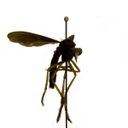
Diogmites platypterus is a of robber fly in the Asilidae, commonly known as the Black Hanging Thief. Like other members of the Diogmites, it is known for its distinctive hunting of swinging from its front or middle legs while manipulating prey with the remaining legs. The species is part of a diverse group of predatory flies that are important components of insect across North America.
Pronunciation
How to pronounce Diogmites platypterus: //daɪˈɒɡmɪtiːz plætˈɪptərəs//
These audio files are automatically generated. While they are not always 100% accurate, they are a good starting point.
Identification
Members of the Diogmites are recognizable by their characteristic "hanging thief" —suspending themselves from vegetation by one or two pairs of legs while handling prey with the others. Diogmites platypterus specifically can be distinguished from by examination of wing venation and body proportions, though precise identification typically requires reference to taxonomic keys. The has dark coloration consistent with its "Black Hanging Thief."
Images
Distribution
Eastern North America. The has been documented across a broad geographic range in the eastern United States, with iNaturalist observations spanning multiple states.
Diet
are predatory on other insects. Like other robber flies, they capture prey in or from perches, immobilizing victims with a paralytic bite and consuming liquefied tissues.
Behavior
Known for the distinctive "hanging" characteristic of the —suspending from vegetation by front or middle legs while using remaining legs to manipulate captured prey. are aerial that perch on vegetation to scan for flying insect prey.
Ecological Role
Aerial contributing to regulation of insect . Larvae of related are known to be predators in soil or decaying wood, though specific larval for D. platypterus is not well documented.
Similar Taxa
- Diogmites neoternatusAnother large Diogmites with similar hanging ; distinguished by differences in body size, coloration (green in D. neoternatus), and geographic distribution
- Other Asilidae generaLack the characteristic hanging ; Diogmites is unique in this suspended prey-handling posture
Sources and further reading
- BugGuide
- Wikipedia
- GBIF taxonomy match
- iNaturalist taxon
- Catalogue of Life
- T.G.I.Flyday – Andrenosoma fulvicaudum | Beetles In The Bush
- T.G.I.Flyday | Beetles In The Bush
- Bug Eric: Robber Flies
- Arkansas | Beetles In The Bush | Page 3
- Asilidae | Beetles In The Bush | Page 2
- July | 2011 | Beetles In The Bush | Page 2