
Polacantha
Martin, 1975
Species Guides
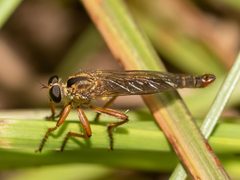
4Polacantha is a of robber flies (Asilidae) established by Martin in 1975. The genus contains approximately 10 described distributed primarily in the Americas. Species in this genus are predatory flies that hunt other insects in . Most species were described by Martin in his 1975 revision of the genus.
Pronunciation
How to pronounce Polacantha: /ˌpɒl.əˈkæn.θə/
These audio files are automatically generated. While they are not always 100% accurate, they are a good starting point.
Images
Distribution
of Polacantha occur in the Americas. Specific distribution data varies by species: Polacantha gracilis has been recorded from the southern United States through South America, while other species have more restricted ranges based on type localities.
Diet
Predatory on other insects, consistent with the Asilidae. Specific prey preferences within Polacantha have not been documented.
Life Cycle
Complete with , larval, pupal, and stages. Larval development occurs in soil or decaying organic matter, typical of Asilidae, though specific details for Polacantha are not documented.
Behavior
are aerial that capture prey in using their legs. Hunting is characteristic of robber flies but specific behavioral observations for Polacantha are limited.
Ecological Role
that regulate of other insects. As with other Asilidae, they likely function as predators in their respective .
Similar Taxa
- Other Asilidae generaPolacantha can be distinguished from related by genitalic characters and wing venation patterns described in Martin's 1975 revision. External morphological differences are subtle and require expert examination.
More Details
Taxonomic History
The was erected by C.H. Martin in 1975 to accommodate previously placed in other genera, particularly those with distinctive male genitalic structures. Martin described nine new species and transferred one previously described species (Polacantha gracilis, originally described as Asilus gracilis by Wiedemann in 1828).
Species Diversity
The contains 10 described : P. arcuata, P. badia, P. brevis, P. composita, P. gracilis, P. grossa, P. pegma, P. petila, P. sinuosa, and P. tridens. Most species are known from limited material and .