
Pycnomerini
Erichson, 1845
Genus Guides
1- Pycnomerus(ironclad beetles)
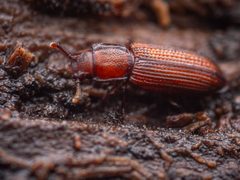
Pycnomerini is a tribe of beetles in the Zopheridae, Zopherinae, first described by Erichson in 1845. The tribe includes the Pycnomerus, whose members are primarily saproxylic, inhabiting dead and decaying wood in forest . Some , such as P. rimatara and P. prebblei from Rimatara in French Polynesia, are known only from subfossil material and are considered likely extinct due to destruction. The tribe has a global distribution with documented observations across multiple regions.
Pronunciation
How to pronounce Pycnomerini: /ˌpɪknəˈmɛrɪnaɪ/
These audio files are automatically generated. While they are not always 100% accurate, they are a good starting point.
Images
Habitat
Associated with forest , particularly lowland forest. Members are saproxylic, dependent on dead and decaying wood. The two Rimatara were restricted to intact indigenous forest, which has been largely eliminated on the island through human activity including fire-based landscape .
Distribution
Global distribution with records from multiple regions; includes island endemics such as the extinct or likely extinct from Rimatara, Austral Archipelago, French Polynesia.
Ecological Role
Saproxylic beetles that contribute to wood decomposition and nutrient cycling in forest . Their presence indicates intact forest with sufficient dead wood resources.
Human Relevance
Serve as indicators of forest integrity and degradation. The likely extinction of P. rimatara and P. prebblei illustrates long-term human impacts on Polynesian lowland forests through fire use and landscape , paralleling documented extinctions in birds and land snails.
More Details
Conservation significance
The subfossil-only record of P. rimatara and P. prebblei from older than 200–300 years before present, combined with absence of historical collections and lack of intact forest on Rimatara, supports assessment as likely globally extinct. This pattern reflects broader anthropogenic extinction dynamics in Polynesian island .