
Polypleurus perforatus
(Germar, 1823)
Eastern Perforated Teneb
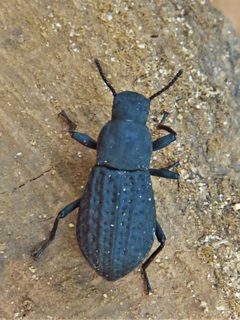
Polypleurus perforatus is a darkling beetle in the Tenebrionidae, commonly known as the Eastern Perforated Teneb. The is characterized by distinctive perforations or punctations on its . It has been documented primarily in eastern North America, with over 230 observations recorded on iNaturalist. The species was first described by Germar in 1823.
Pronunciation
How to pronounce Polypleurus perforatus: //ˌpɒlɪˈplʊərəs ˌpɜːrfəˈreɪtəs//
These audio files are automatically generated. While they are not always 100% accurate, they are a good starting point.
Identification
The combination of perforated or deeply punctate , dark coloration, and eastern North American distribution distinguishes this from similar darkling beetles. The specific epithet 'perforatus' directly references the diagnostic punctate elytral surface. Separation from other Polypleurus species and eastern Tenebrionidae requires examination of elytral sculpturing patterns and potentially genitalic characters.
Images
Habitat
Specific preferences are not well documented. As a member of Tenebrionidae, it likely occurs in dry, decaying organic matter, under bark, or in similar sheltered microhabitats. Eastern North American distribution suggests association with temperate deciduous or mixed forest .
Distribution
Eastern North America. The 'Eastern Perforated Teneb' and 230+ iNaturalist observations indicate established presence in this region, though precise range boundaries are not documented in available sources.
Seasonality
Activity period not documented in available sources. darkling beetles are generally most active during warmer months, but specific for this is unknown.
Ecological Role
As a member of Tenebrionidae, likely contributes to decomposition of plant material and nutrient cycling in forest floor . Specific ecological functions for this have not been documented.
Human Relevance
No documented economic or agricultural significance. The is primarily of interest to entomologists and naturalists, as evidenced by iNaturalist observation records.
Similar Taxa
- Other Polypleurus speciesCongeneric share the -level characteristic of body sculpturing; precise identification requires examination of punctation , pattern, and distribution
- Eastern Tenebrionidae (e.g., various Tenebrio, Tribolium, or related genera)Dark coloration and body form overlap with many darkling beetles; the perforated of P. perforatus provide the primary distinguishing character
More Details
Taxonomic note
The was described by Germar in 1823, indicating long-standing recognition in the taxonomic literature. The Polypleurus remains relatively obscure with limited modern systematic study.
Data availability
Most information about this derives from citizen science observations (iNaturalist) rather than formal ecological or taxonomic publications. This limits the depth of biological information available.