
Alobates pensylvanicus
(DeGeer, 1775)
false mealworm beetle
Alobates pensylvanicus, commonly known as the false , is a of darkling beetle in the Tenebrionidae. It is native to North America and has been documented as a for parasitic mite larvae, specifically Neotrombidium beeri, which occupy the subelytral space of beetles. The species is part of the diverse tenebrionid fauna associated with decaying organic matter and forest floor .
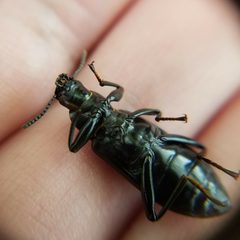
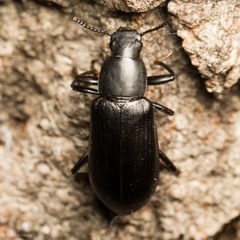
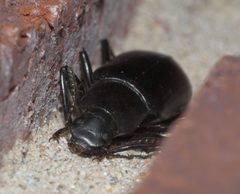
Pronunciation
How to pronounce Alobates pensylvanicus: /æloʊˈbeɪtiːz pɛnˌsɪlˈvænɪkəs/
These audio files are automatically generated. While they are not always 100% accurate, they are a good starting point.
Images
Distribution
Eastern and central North America. Documented from Canadian provinces including Manitoba, New Brunswick, Nova Scotia, Ontario, and Quebec. United States distribution inferred from records and iNaturalist observations but specific states not verified in provided sources.
Host Associations
- Neotrombidium beeri - Larvae of this mite parasitize A. pensylvanicus in the subelytral space, as documented in Arkansas
More Details
Parasite documentation
The has been specifically noted in acarological research as a for parasitic mite larvae, providing a rare documented case of mite- in the Parasitengona group. This association was observed in Arkansas and represents one of the few verified host records for Neotrombidium beeri.
Sources and further reading
- BugGuide
- GBIF taxonomy match
- iNaturalist taxon
- "Go Pick Up a Mite!" Two Cents From an Acarologist and His Love for Mites
- Pixelated Entomology: Analyzing Beetles' Flower Use Through Digital Samples
- Beneficial Beetle Diversity Blooms on Strip-Tilled Farms
- Bug Eric: Grape is Blooming
- Amorpha borer on goldenrod | Beetles In The Bush
- New Meta-Analysis Examines How Landscape Fire Smoke Affects Insects