
Typhlusechus singularis
Linell, 1897
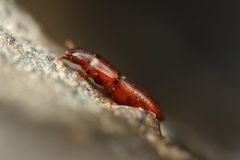
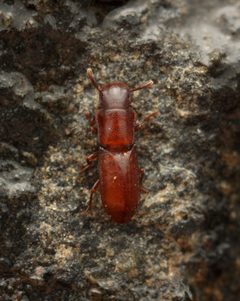
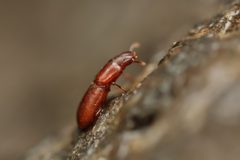
Typhlusechus singularis is a of darkling beetle (Tenebrionidae) described by Linell in 1897. The Typhlusechus contains few described species and is characterized by reduced or absent , an associated with subterranean or cave-dwelling habits. This species is part of a group of tenebrionids that have evolved morphological specializations for life in darkness, including elongated appendages and depigmentation. Records indicate extremely limited observation data, with only 4 documented observations in iNaturalist.
Pronunciation
How to pronounce Typhlusechus singularis: /tɪˈfluːsɛkəs sɪŋˈɡjʊlərɪs/
These audio files are automatically generated. While they are not always 100% accurate, they are a good starting point.
Identification
Distinguished from other Tenebrionidae by the combination of reduction or absence, elongated appendages, and likely pale coloration. Separation from congeneric requires examination of male genitalia and detailed . The Typhlusechus is distinguished from similar eye-reduced tenebrionid genera by antennal structure and pronotal configuration.
Images
Appearance
As a member of a with troglomorphic adaptations, likely exhibits reduced or absent , elongated and legs relative to body size, and depigmented (pale or whitish) . Body form presumably elongate and somewhat flattened, typical of subterranean tenebrionids. Specific coloration, body proportions, and distinctive morphological features remain undocumented in readily accessible sources.
Habitat
Subterranean environments including caves, soil cracks, and deep leaf litter; associated with permanently dark, humid microhabitats stable in temperature and moisture.
Distribution
North America; specific range details poorly documented. The has been recorded from cave systems in the United States.
Ecological Role
Contributes to nutrient cycling in subterranean through detritivory; serves as prey for cave-adapted .
Similar Taxa
- Other Typhlusechus speciesCongeneric share troglomorphic features; require genitalic examination for definitive separation
- Glyptotus and other eye-reduced TenebrionidaeSimilar cave-adapted ; distinguished by antennal club structure and body proportions
More Details
Troglomorphy
The Typhlusechus exhibits classic troglomorphic : reduction, appendage elongation, and depigmentation. These convergent traits evolve independently in cave-dwelling beetles across multiple .
Taxonomic obscurity
This remains poorly known due to collection difficulty in subterranean . Most records derive from cave biological surveys rather than general collecting.