
Bothrotes canaliculatus
(Say, 1824)
Species Guides
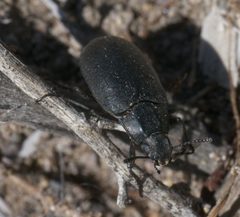
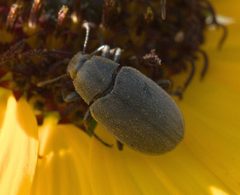
1Bothrotes canaliculatus is a darkling beetle in the Tenebrionidae, originally described by Thomas Say in 1824 as Epitragus canaliculatus. The species has been observed in the southwestern United States and Mexico. Field observations indicate are attracted to flowers of Gutierrezia sarothrae (broom snakeweed) in northeastern New Mexico, where they occur alongside other flower-visiting beetles.
Pronunciation
How to pronounce Bothrotes canaliculatus: /boʊˈθroʊtiːz kəˌnælɪkjuˈleɪtəs/
These audio files are automatically generated. While they are not always 100% accurate, they are a good starting point.
Images
Habitat
Observed in juniper/pine/oak woodland at the edge of Great Plains grasslands in northeastern New Mexico, specifically at Mills Rim Campground in Harding County. The represents an isolated Rocky Mountain floral element within the Great Plains, featuring Pinus edulis, Pinus ponderosa, Juniperus monosperma, Juniperus scopulorum, Quercus grisea, and Quercus × undulata.
Distribution
Mexico; southwestern United States (documented from northeastern New Mexico). GBIF records indicate occurrence in Mexico, though the status is marked as doubtful.
Seasonality
have been observed in mid-September, suggesting late-season activity.
Host Associations
- Gutierrezia sarothrae - flower visitation observed on flowers of broom snakeweed, though whether this represents feeding, mating, or incidental presence is unconfirmed.
Behavior
have been observed on flowers during daylight hours in the presence of other flower-visiting insects including bees, soldier beetles (Chauliognathus basalis), and other beetles.
Similar Taxa
- Eleodes spp.Other darkling beetles in the same Tenebrionidae that share general body form and occur in similar southwestern .
- Coelocnemis sulcataAnother tenebrionid observed in similar southwestern coniferous , though distinguished by association with tree trunks rather than flowers.
More Details
Taxonomic status
GBIF marks the status as 'DOUBTFUL' despite exact name matching, suggesting possible taxonomic uncertainty or need for revision.
Subspecies
A B. canaliculatus acutus has been recognized, though details of its distribution and distinguishing features are not provided in available sources.