
Stenomorpha mckittricki
(Pierce, 1954)
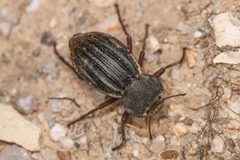
Stenomorpha mckittricki is a of darkling beetle in the Tenebrionidae, originally described by Pierce in 1954. The Stenomorpha comprises elongate, slender beetles primarily distributed in arid and semi-arid regions of western North America. This species appears to be rarely encountered, with limited documented observations. As with other tenebrionids, it is likely associated with dry and activity patterns.
Pronunciation
How to pronounce Stenomorpha mckittricki: /ˌstɛnəˈmɔrfə məkˈkɪtrɪki/
These audio files are automatically generated. While they are not always 100% accurate, they are a good starting point.
Identification
Members of the Stenomorpha are characterized by their elongated, parallel-sided body form, narrow pronotum, and long legs relative to body size. -level identification within Stenomorpha generally requires examination of male genitalia and detailed comparison of antennal and pronotal . Stenomorpha mckittricki may be distinguished from congeneric species by subtle differences in body proportions and surface sculpturing, though specific diagnostic features for this species are not well documented in accessible literature.
Images
Habitat
Based on -level associations and limited collection records, this likely inhabits arid or semi-arid environments including desert scrub, grasslands, and open rocky areas. Stenomorpha species are typically ground-dwelling and often found under surface debris or within soil cracks during daylight hours.
Distribution
Documented from the southwestern United States, with records from Arizona and potentially adjacent regions. The precise range boundaries remain poorly defined due to limited sampling.
Behavior
activity is inferred from -level traits; individuals likely remain concealed under ground cover during daytime to avoid desiccation. As with other tenebrionids in arid zones, they may exhibit slow, deliberate movement and reduced metabolic rates adapted to water-limited environments.
Ecological Role
Likely contributes to decomposition of plant material and nutrient cycling in arid soils. Serves as prey for various , reptiles, and birds.
Human Relevance
No documented economic or medical significance. Of potential interest to entomologists studying diversity in North American deserts.
Similar Taxa
- Stenomorpha consobrinaOverlapping distribution and similar elongate body form; requires examination of antennal structure and male genitalia for separation.
- Eleodes speciesCommon sympatric tenebrionids with which it may be confused; Eleodes are generally more robust with broader, more rounded pronota and often possess defensive secretion capabilities.
More Details
Taxonomic History
Originally described in a different by Pierce (1954) and subsequently transferred to Stenomorpha. The epithet honors a collector or colleague associated with the original type series.
Collection Rarity
With only 19 observations documented on iNaturalist and limited museum records, this appears genuinely scarce or undercollected, possibly due to cryptic habits and specialized microhabitat requirements.