Cynaeus angustus
(LeConte, 1851)
Larger Black Flour Beetle
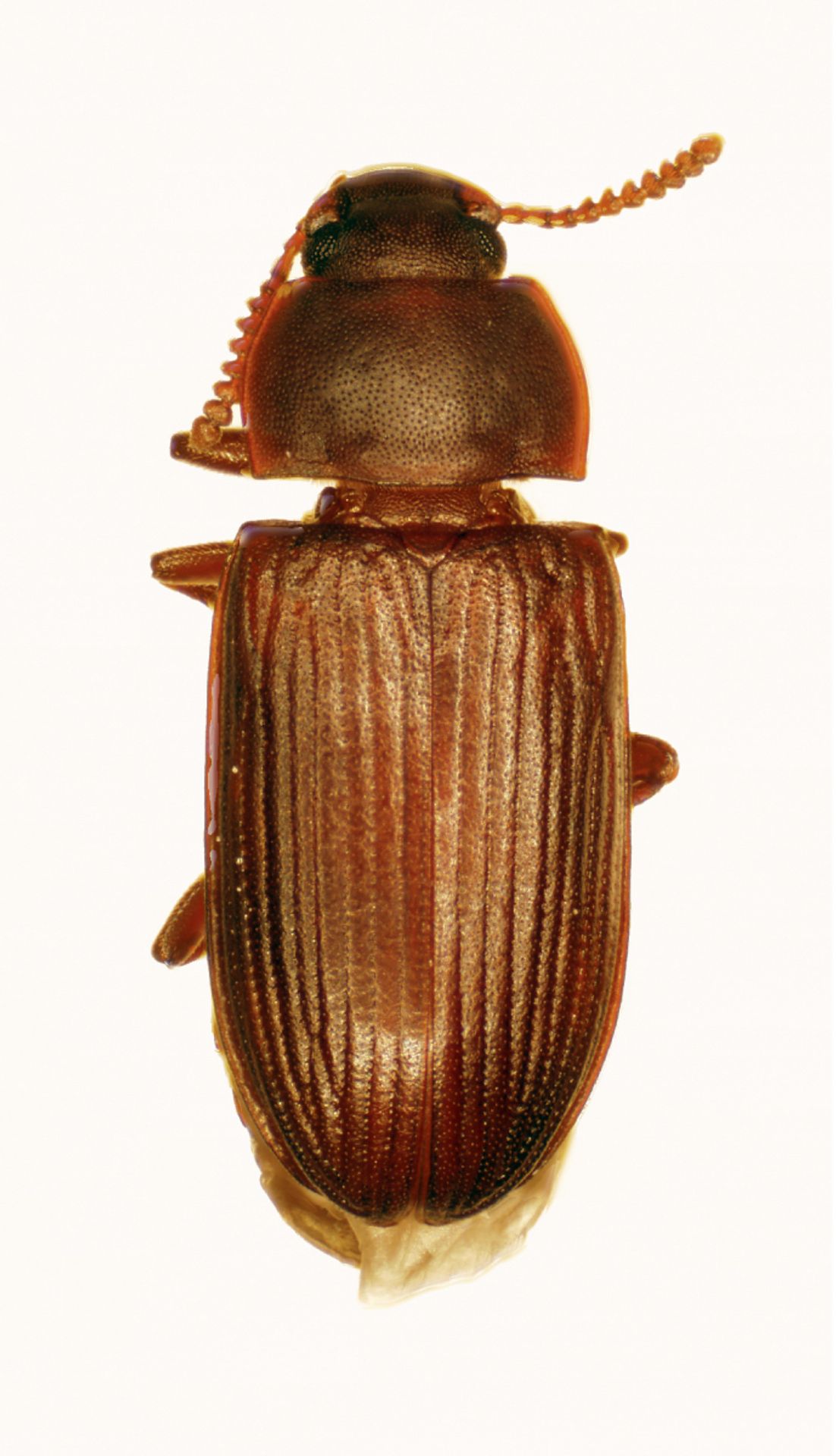
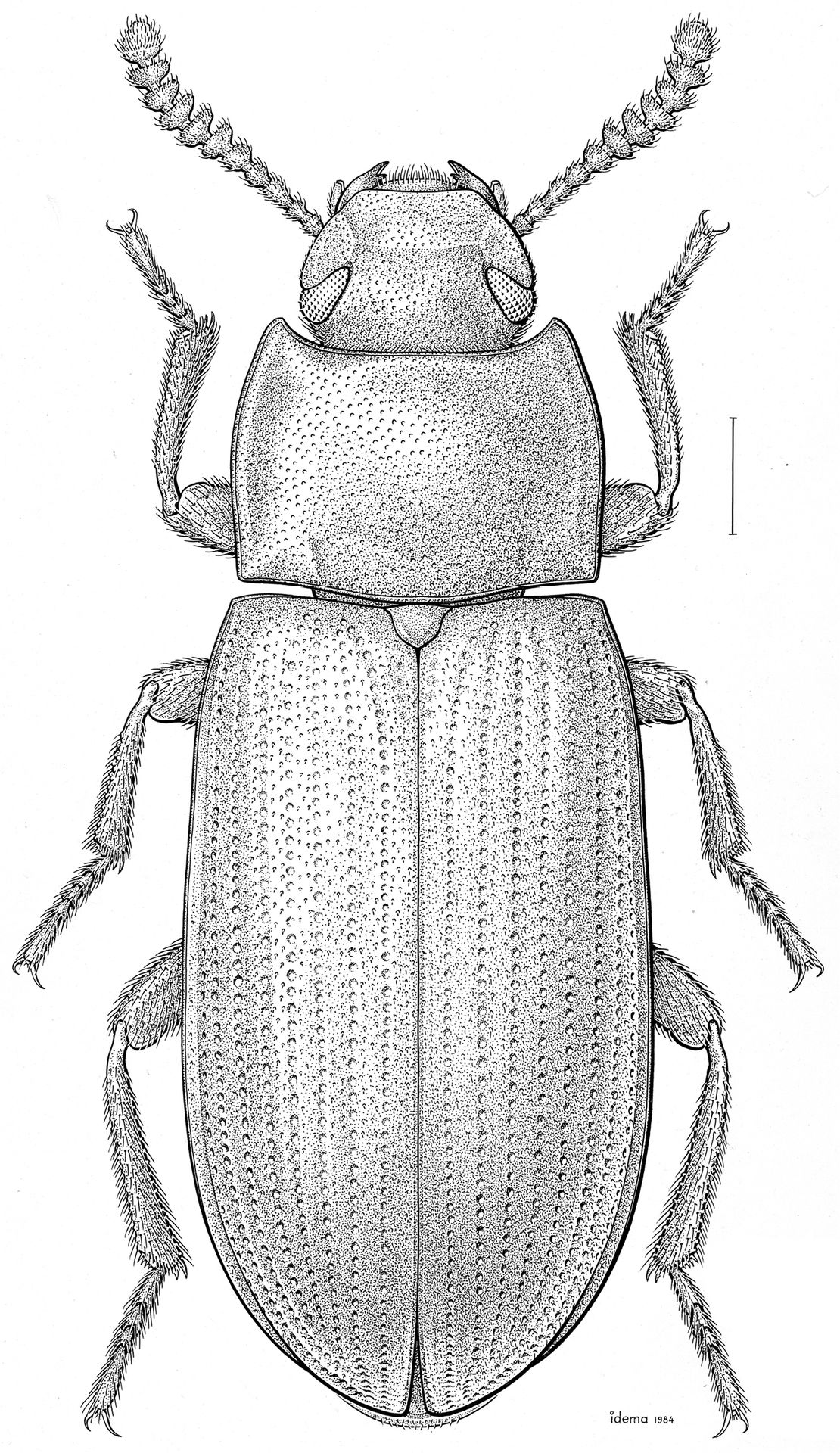
Cynaeus angustus is a North that has become an stored grain pest with established across Europe and Russia. It feeds on corn, wheat, sorghum, soybeans, and peanuts. The shows high with continuous development under favorable conditions and increasing content through its . It serves as to the cynaea.

Pronunciation
How to pronounce Cynaeus angustus: /saɪˈniːəs æŋˈɡʌstəs/
These audio files are automatically generated. While they are not always 100% accurate, they are a good starting point.
Images
Habitat
Stored grain environments including grain elevators, warehouses, and food processing facilities. In Europe, collected along the Danube River in Bulgaria, suggesting riverine transport corridors facilitate spread.
Distribution
to North America with records from Canadian provinces (Alberta, British Columbia, Manitoba, Ontario, Quebec). to Europe: first recorded in Romania, Russia (Belgorod Province), Ukraine (Lugansk and Kharkov Provinces), and Bulgaria (2020-2022 along Danube River).
Diet
Corn, wheat, sorghum, soybeans; peanuts accepted under laboratory conditions. No confirmed records of feeding on peanut in natura.
Host Associations
- Nosema cynaea - ; -parasite relationship described in 1950 dissertation
Life Cycle
Developmental stages: , , . Continuous development occurs under favorable laboratory conditions. content increases through development: larvae 38.22 mg/mL, pupae 47.53 mg/mL, adults 60.00 mg/mL. Electrophoretic protein variety ranges 29-700 kDa across stages.
Ecological Role
Pest of stored grain products. High initial survival rates and enable rapid growth in facilities. Potential nutritional source for based on content, though this application remains theoretical.
Human Relevance
Economic pest of stored grains and oilseeds. status in Europe triggers and control efforts. Methods for control have been outlined in Bulgarian records.
Similar Taxa
- Other Tenebrionidae stored product pestsShared in grain ; C. angustus distinguished by larger size, black coloration, and specific association with larger grain particles
- Tribolium spp.Both are ; C. angustus is larger and darker, with different feeding preferences for intact grains versus damaged grain products
Sources and further reading
- BugGuide
- GBIF taxonomy match
- iNaturalist taxon
- NCBI Taxonomy
- Links - AgriLife Extension Entomology
- William Meikle Seminar: A Case Study With Honey Bees | Bug Squad
- Bembicid Holdings | Entomology Research Museum
- Ixodes angustus hyperparasitism - Entomology Today
- Spooky eyes on the Stygian rainforest floor: Headlight beetles, fire beetles, Pyrophorus spp. — Bug of the Week
- Super Crop Challenge #15 | Beetles In The Bush
- Cynaeus angustus (Coleoptera: Tenebrionidae), a new alien beetle in Romania
- Host-parasite relationship between Cynaeus angustus Lec. and Nosema cynaea Sp. Nov.
- Avaliação proteica e parâmetros populacionais de Cynaeus angustus Le Conte (Coleoptera: Tenebrionidae)
- Geographical Distribution of Cynaeus angustus (LeConte) (Coleoptera: Tenebrionidae) and its Association with Stored Products
- First record of the invasive alien species Cynaeus angustus (LeConte, 1851) (Coleoptera, Tenebrionidae) in Bulgaria
- Predicting current and future potential distribution of Cynaeus angustus (Coleoptera: Tenebrionidae) in global scale using the MaxEnt model
- First record of the larger black flour beetle (Cynaeus angustus) (Coleoptera: Tenebrionidae) from Russia, with a review of its North American and trans-continental expansion