
Leichenum
Dejean, 1834
Species Guides
1- Leichenum canaliculatum(Madagascar beetle)
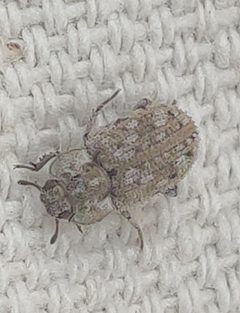
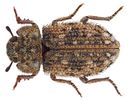
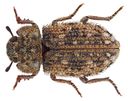
Leichenum is a of darkling beetles (Tenebrionidae) established by Dejean in 1834. The most widely documented is Leichenum canaliculatum, commonly called the Madagascar beetle, which has become established across tropical and subtropical regions worldwide. Members of this genus are associated with sandy and have been recorded as occasional pests of crops and ornamental plants.
Pronunciation
How to pronounce Leichenum: //laɪˈkiːnəm//
These audio files are automatically generated. While they are not always 100% accurate, they are a good starting point.
Images
Habitat
Sandy environments including beaches, lake shorelines, and river margins. hide under leaf litter in sand depressions.
Distribution
Widely distributed across Africa, Asia, and Oceania including Australia, Botswana, Cameroon, Chad, Cuba, Gambia, Guadeloupe, India, Italy, Japan, Kenya, Liberia, Mozambique, Namibia, Niger, Nigeria, Senegal, Somalia, South Africa, Spain, Sri Lanka, Sudan, Tanzania, Thailand, and Vietnam. Introduced to the United States (coastal areas) and France.
Seasonality
show highest from March to November.
Life Cycle
Mature larvae reach 12 mm in length. Pupae are approximately 6 mm long with urogomphi into a long spine-like process ending in two small round lobes.
Behavior
are readily attracted to light traps and both baited and unbaited pitfall traps.
Human Relevance
Known agricultural pest: and larvae feed on roots of Bermuda grass, cotton, turnips, and rutabagas. Larvae have been observed feeding on rug nap and are associated with damage to peach trees and Amaryllis bulbs.